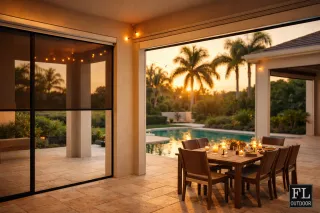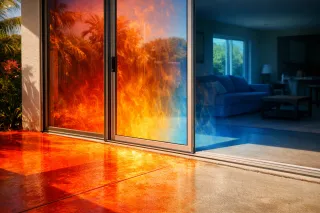

One-Track Retractable Screens are the result of years of real-world testing, research, and engineering refinement. Built to withstand the harshest conditions without sacrificing aesthetics, they offer maximum protection for your patio or lanai with hurricane-rated performance.
Tested, Trusted, Proven, and Never compromised—these screens are built for the long haul:

Fenetex introduced the patented quiet spring technology, the core of our One-Track system, nearly a decade ago.
We've crafted the perfect self-adjusting screen system that operates beautifully silently when deployed, ensures frustration-free operation, and can be used in almost any weather condition.
While others have experimented with alternative methods to achieve the advantages of our One-Track screens, none have achieved the unique combination of near-silence, ease of operation, affordability, high reliability, and exceptional dependability.

One-Track is the only screen on the market that can self correct and auto refeed screen should they become dislouged.

Powder Coated Aluminum Protects your investment from exposer and Corrosion.

Our screens are designed to withstand the extreme. High wind, Rain, or Shine, Dust Dirt, Dander, it does not matter. MaxForce Cover it all
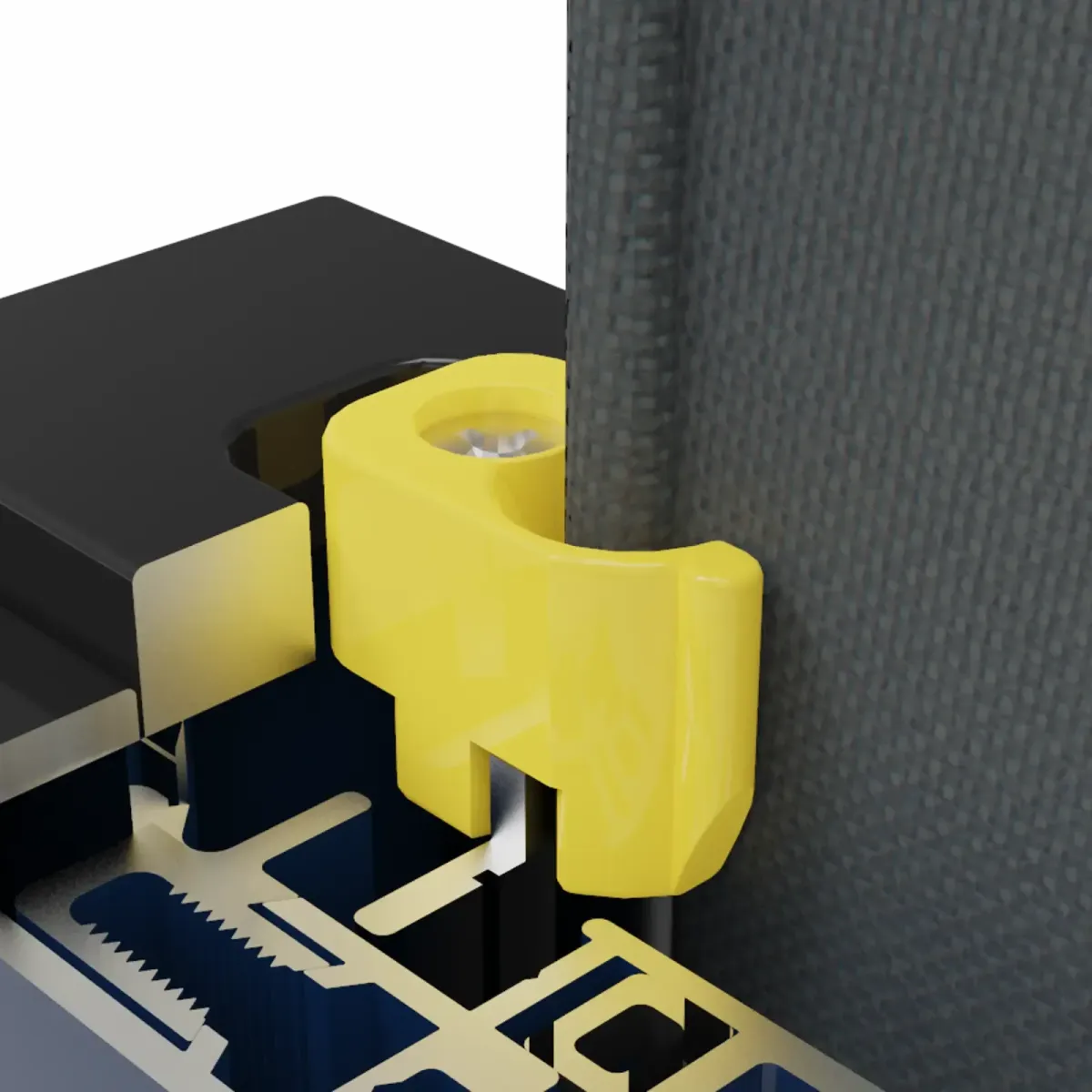
Fenetex was the first in the industry to replace traditional zipper systems with Keder-based side retention technology, setting a new benchmark for strength and reliability. Proven over years of success, this innovation delivers smooth operation, superior wind resistance, and long-term durability
Lock Tight Side Retention
Prevent Screen Hangups
Prevent Jams
Prevent Snaggs
Prevent Rewraps.
The Fenetex Keder is made with a strong Nylon cord wrapped in smooth, slippery fabric, so it can slide into the edge of the screen track and hold tight—just like how sailboats use Keder to attach their sails to the mast. Fenetex was the first to bring this smart technology to retractable screens back in 2007.

We made our Keder system just right by picking the best cord, fabric, and special coatings. After more than 10 years of testing and using it, it works really well and lasts a long time.

Thenm, the edge of the screen is cut just right and put into the Fenetex keder. Then, two bars—one on top and one on the bottom—press together to start the sticking process.

After welding, the keder and screen become one solid piece—no zippers, glue, or stitching to fail. It's built to last, and we guarantee it with a lifetime warranty.

Last , Once the weld is finished, the keder and screen are fused together for good—no zippers, glue, or stitching to worry about. It's a bond that lasts, which is why we back it with a lifetime warranty.


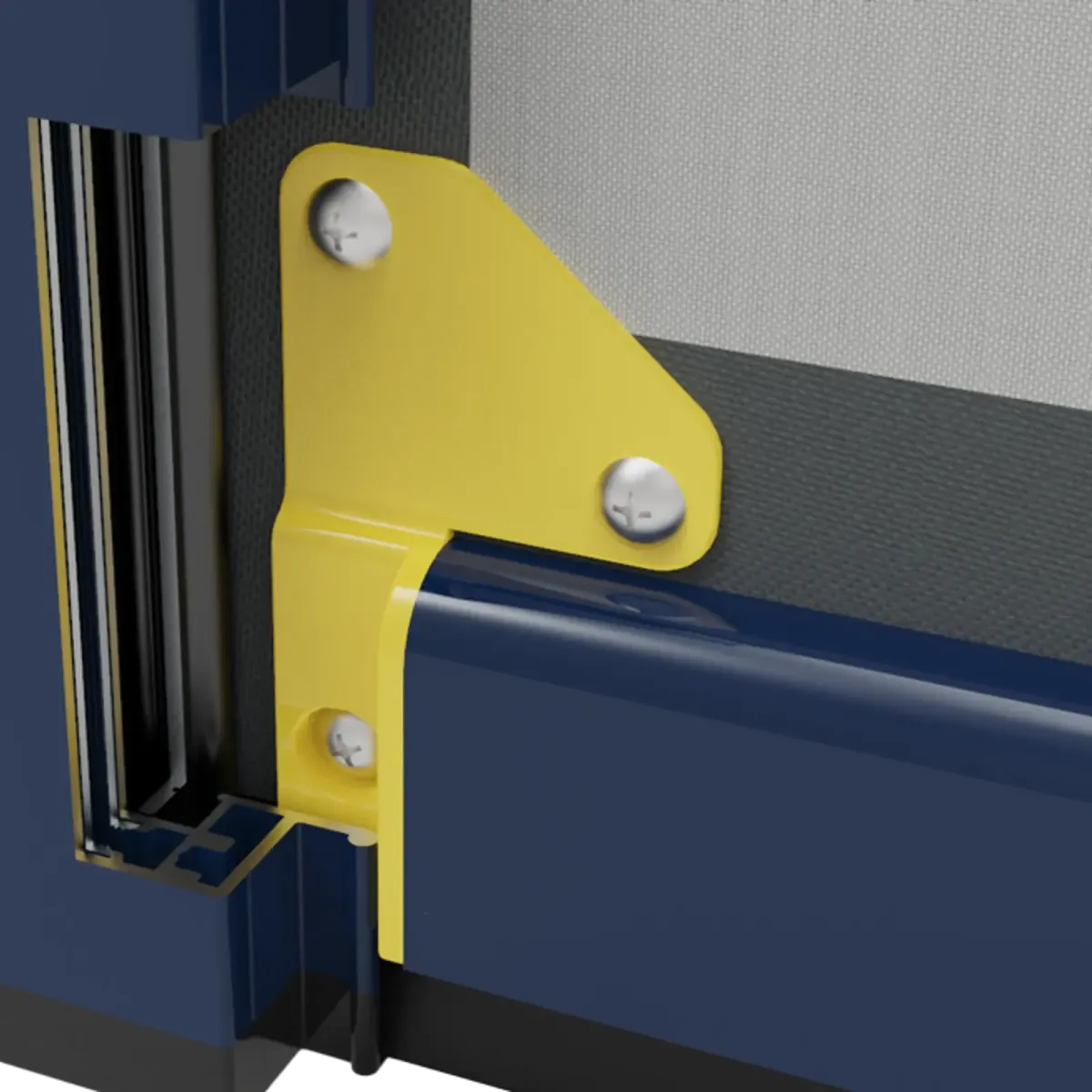
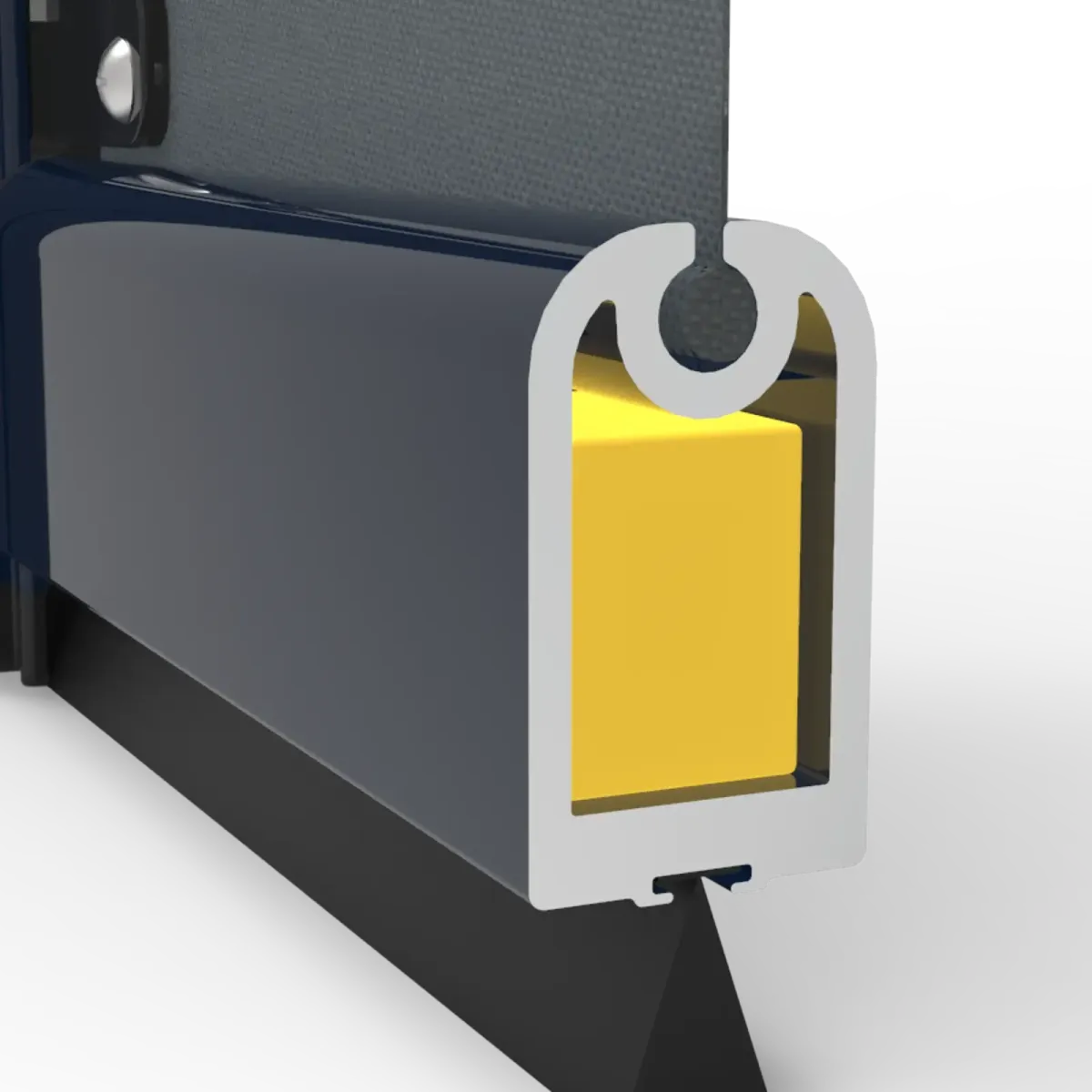
Recognizing that screen wear is most prominent at the corner where the weight bar and screen meet, Fenetex engineers designed a robust and flexible guide made of toughened nylon. This innovative design reinforces the corner connection, extending the screen's lifespan,
.

Fenetex offers a well-engineered, low-profile standard weight bar suitable for installations in low-wind areas. When rolled up, it minimizes visibility in storage. For locations with higher wind exposure, a heavier weight bar can be specified as needed.
.

Fenetex, as the first to employ keder-edged screens, opted against zippers, known for potential issues. Keder's smooth, durable design avoids past failures.
.

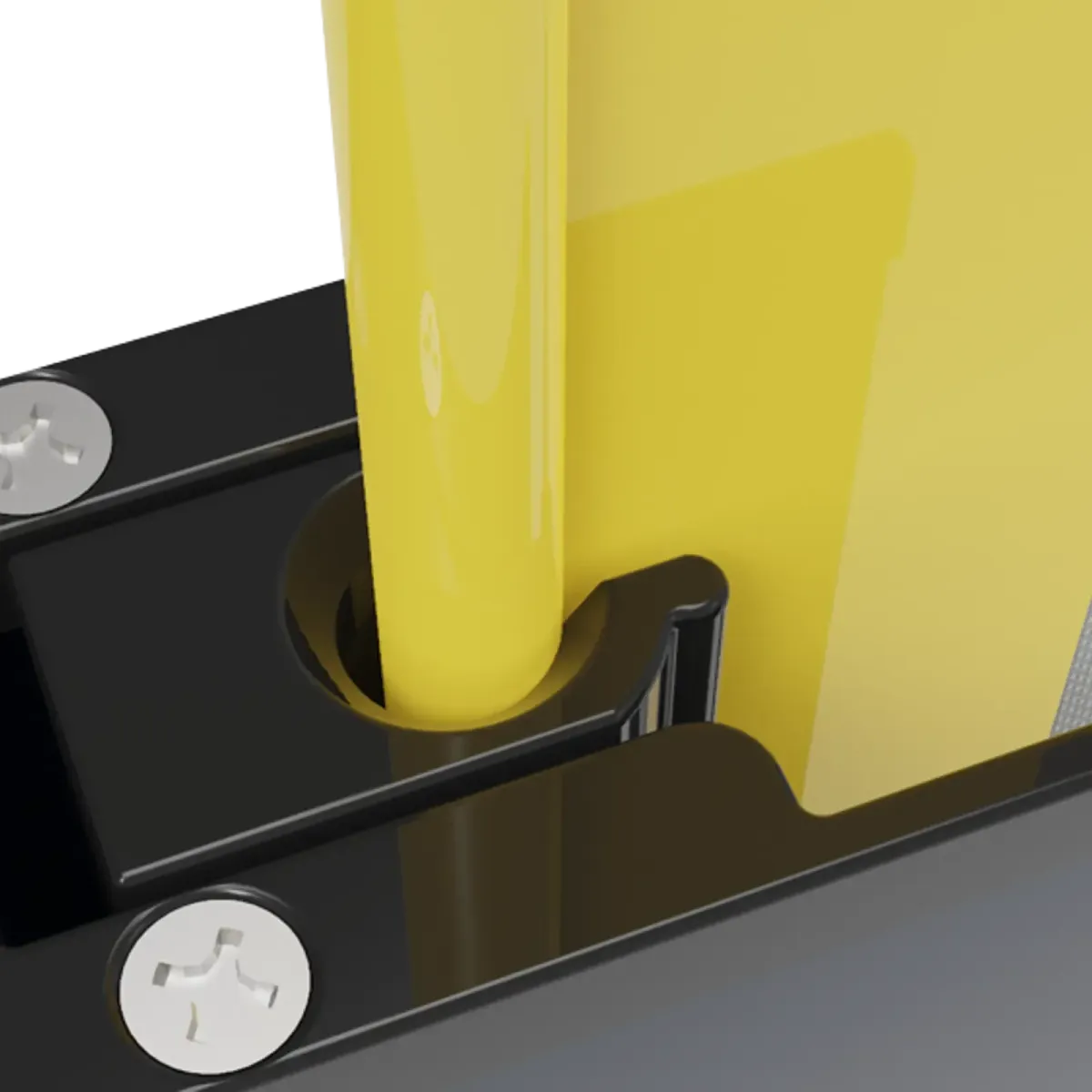
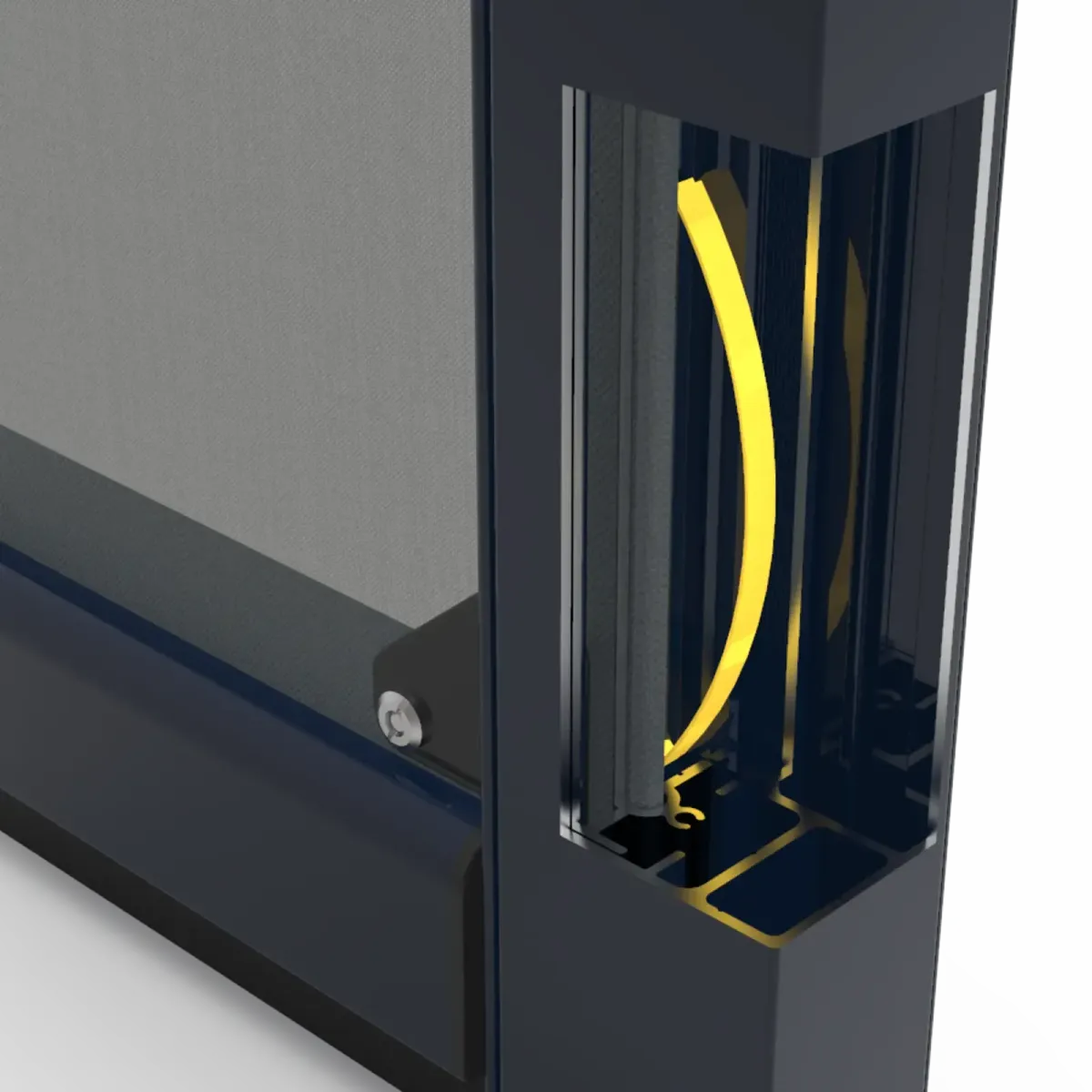
Fenetex retractable screens are designed to never come out of their tracks. The screen pre-feeder facilitates a smooth transition from the reel to the side track. Smart motors instantly halt the downward motion of the screen, preventing it from dislodging from the tracks.
.

One-Track employs a unique spring-based tensioning system that ensures nearly silent operation of the screens. This technology prioritizes a quiet and comfortable outdoor experience. Think of it like shock absorbers in a car - It's the springs that give you a quiet comfortable ride.
.
Backed by Twitchell’s OmegaTex fabric, our hurricane screens are engineered with ballistic-grade and enhanced fibers for maximum strength and durability. These fabrics aren’t just tough—they’re also UV-protected for long-lasting performance and crafted with aesthetics in mind. Choose from six elegant colors designed to complement the architecture of your home.
Our you looking for the perfect solutions to keep Mother Nature out. Nano 95 screens do exactly that.
Colors:
Black, Stone Texture, Shadow Texture, Granite, Espresso, charcoal, white, bable, bone.

Do you want to create that perfect 4 season patio. Nano 97 block outdoor elements, provides maxium privancy, but they do not compormise visability.
Colors:
Espresso Texture, Basket Tobacco, Basket Charcoal, Basket Granite, Basket Black.

AME 97 Screens are as they sound, Special. They are the Provide altimate cliamate control for your patio or lanai.
Colors:
White, Tobaco, Charcoal, Black

Do you have an annoying Neighbor or need Friday Night privacy. Black out screen are solid wall of pure unadlitrated privacy.
Black, Charcoal, Tabacco, White

The Textilene Series is all about weather control and air flow. Controal what you let in. If you block 80, then you allow 20%/10% to flow. Blocks dirt, rain, dander, harmful UV-Rays, and dust..
Colors:
Brown, Desert Sand, Busk Grey, Sandstoe, White, Black & Brown, Black

The Textilene Series is all about weather control and air flow. Controal what you let in. If you block 95, then you allow 5% to flow. Blocks dirt, rain, dander, harmful UV-Rays, and dust..
Colors:
Almond Brown, Carbon Tex, Graphite, Mushroom, Pewter, Putty, Tumbleweed...


Choosing the right screen color is simple with Fenetex. Our standard color selections are designed to blend seamlessly with your architecture and framework, offering a clean, cohesive look. For unique designs, custom powder coating is available to match any project. All finishes are marine-grade and infused with UV ray inhibitors—built to endure the elements and maintain their beauty for years to come.
Selecting your preferred control method is effortless with Fenetex. Whether you choose handheld remotes, mobile apps, or smart home integration, our systems are designed to fit your lifestyle. No need to settle—just integrate and enjoy continuous, seamless operation 24/7. It's control on your terms, exactly when and where you need it.

With the Bond Bridge Pro, managing your Fenetex MaxForce Hurricane Screens is seamless and smart. This powerful integration allows you to open or close your screens from anywhere using your smartphone, voice assistant, or home automation system. Whether you're at home, at work, or away on vacation, control is always at your fingertips.


Proudly Made in the USA—every Fenetex screen's are built with American strength, precision, and pride. From the smallest components to the final assembly, our materials are sourced and manufactured right here in the United States. No outsourcing. No compromises. Just hardworking Americans protecting American homes with the toughest screen system on the market.

At FL OUTDOORr, quality isn’t a buzzword—it’s a promise. Every Fenetex system we install is a product of precision engineering and world-class American manufacturing, built to perform under pressure and look flawless doing it.
We are highly trained professionals who treat your home like their own. From laser-accurate measurements to clean, detail-focused installations, we don’t cut corners—we define them.


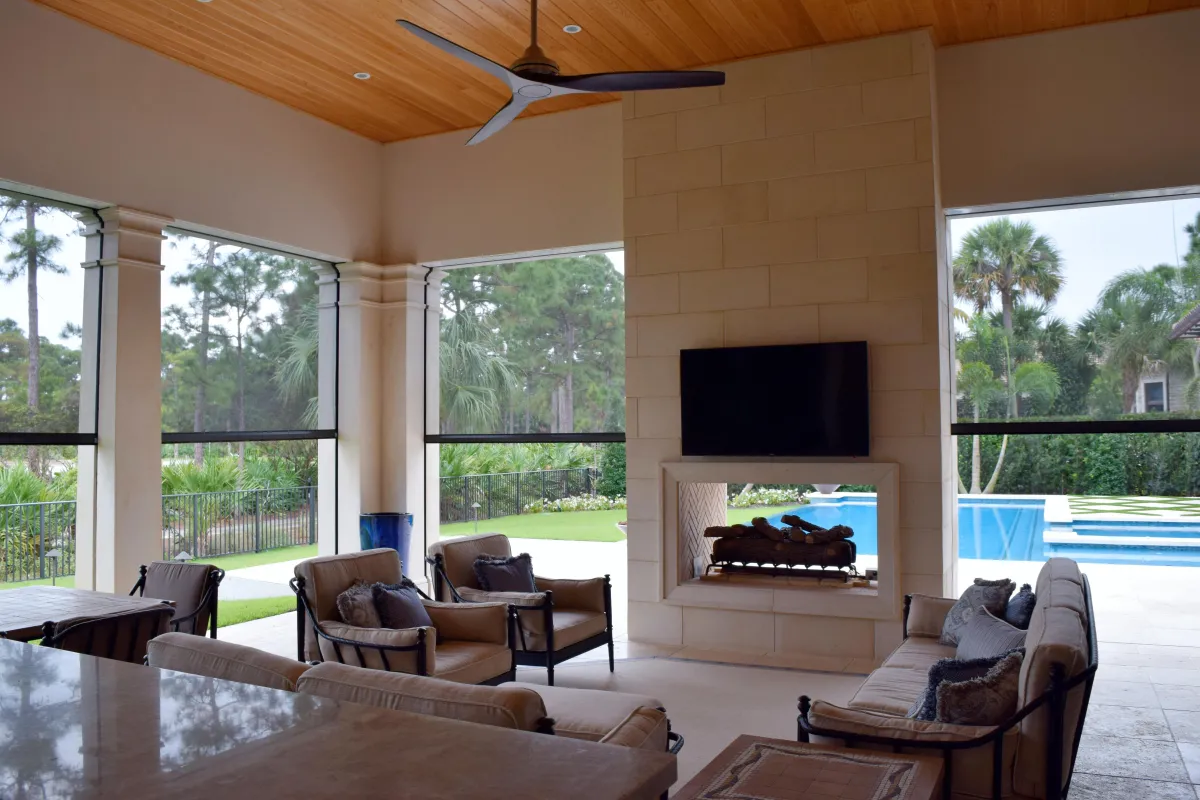
Home should be a sanctuary to relax, spend time with family, and maybe even entertain. Adding Fenetex screens to patios empowers you to curate any outdoor space so it complements your aesthetics and meets your needs
creens are the solution for both residential and commercial outdoor spaces. Having been in business since 2007, we continually innovate to improve our products and stay ahead of the industry.

Whether you're investing in your restaurant's patio seating or weather-proofing your outdoor event space, making sure those areas remain usable and enjoyable for guests is critical to the bottom line and your business' ultimate success
Does your restaurant’s patio contend with glaring sun? Or maybe the luxury outdoor kitchen at your home is being invaded by bugs? Maybe the upcoming hurricane season has you concerned. Whatever the challenge, Fenetex Motorized
S

Let's clear something up right away.
When we say "four-season dad cave," we're not talking about a man cave with neon beer signs and a poker table. We're not suggesting Dad needs a tiki bar or a TV the size of a small car.
We're talking about something much simpler and infinitely more valuable: an outdoor space Dad can actually use when it's 45 degrees and getting dark at 5:30 PM.
That's it. That's the dream.
No ice sculptures. No heated floors. No architectural digest-worthy outdoor kitchen that costs more than a sedan.
Just a functional space where Dad can grill a burger in November, have his morning coffee in February, or sit by a fire pit in March without feeling like he's doing something weird.
Turns out? This is shockingly achievable.
Before we dive into solutions, let's talk about the people who've been doing this right for centuries.
Remember our Norwegian friends from Part 1? The ones with friluftsliv who laugh at our winter surrender? They're not doing anything magical. They're not genetically superior to cold. They don't have some secret Nordic technology we haven't discovered yet.
They just have a different mindset and some practical know-how.
Friluftsliv families are more active, positive, and connected to one another, even when the trees are bare and windows frosted Appalachian Mountain Club. And they achieve this not through expensive infrastructure, but through three simple things:
Appropriate clothing
Heat sources that actually work
A total rejection of the idea that winter means "stay inside"
That's the framework. Now let's make it work for Dad.
If Dad's going to reclaim his outdoor territory, it starts with fire.
Not metaphorically. Literally. Fire.
The fire pit has become the beating heart of year-round outdoor living, and for good reason. Fire pits are chosen by 58% of experts as essential for year-round outdoor use, with 27% specifically recommending them as the most popular option MarketresearchMarketresearch.
But here's where most people get it wrong: They think bigger is better. They imagine some massive stone monument that requires a contractor, a permit, and a small loan.
Wrong approach.
Portable Fire Pits ($150-$500)
Move them where you need them
Store them when you don't
No permanent commitment
Perfect for Dad who wants flexibility
Built-In Fire Pits ($800-$3,000)
Become a focal point for the space
Higher heat output
More seating capacity
Best for Dad who knows exactly where he wants his spot
Fire Pit Tables ($400-$1,500)
Dual purpose: warmth + surface for drinks/food
More compact footprint
Great for smaller patios
Ideal for Dad who likes to multitask
The sweet spot? A quality portable fire pit in the $300-$400 range. Dad gets warmth, ambiance, and the flexibility to move it around as needed. No construction required. No permits. No permanent changes.
Just fire. And with fire comes possibility.
Fire pits are romantic. Primal. Satisfying in a way that connects us to something ancient.
But let's be honest—sometimes Dad just wants consistent heat without having to tend a fire like he's auditioning for a survival show.
Enter modern heating solutions that don't require him to be a fire starter every time he wants to use his space.
Outdoor patio heaters provide between 30,000 and 50,000 BTUs, making them ideal for larger spaces Jack Wills. Think of them as the reliable veterans of outdoor heating—not sexy, but they get the job done.
Propane Stand-Up Heaters ($150-$400)
Heat up to 250 square feet
Portable with wheels
10-hour burn time on a single tank
The "set it and forget it" option Dad appreciates
Electric Heaters ($100-$300)
Plug-and-play simplicity
No refueling, no tank storage
More limited range but perfect for covered areas
Best for Dad who values convenience over everything
Wall-Mounted/Ceiling Heaters ($200-$600)
Saves floor space
Permanent solution for covered patios
Higher upfront cost, lower ongoing hassle
Ideal for Dad who's committed to the long game
The verdict? 54% of experts say outdoor heaters are the most popular year-round option, followed by outdoor fireplaces at 41% Marketresearch. Translation: They work. Dad will use them. And they're not as expensive as you think.
Here's the strategy that actually makes sense: Fire pit for ambiance and gathering. Patio heater for functional warmth.
Fire pits create that "outdoor living" vibe that makes Dad actually want to be outside. Patio heaters ensure he's comfortable enough to stay there.
Together? Magic.
Budget: $450-$900 depending on what you choose. Less than that "World's Best Dad" mug collection cost over the years, and infinitely more useful.
Let's talk about overhead protection because this is where people make expensive mistakes.
You don't need to enclose the space. You don't need walls. You don't need to turn the patio into an actual room.
You just need a roof. Some protection from the elements. A psychological boundary that says "this is a space, not just empty air above furniture."
Patio Umbrellas ($100-$400)
Temporary, adjustable, affordable
Limited rain protection
Better than nothing, not a long-term solution
Good for Dad testing the waters
Pergolas ($1,500-$8,000)
Partial coverage with aesthetic appeal
Can add retractable canopies for weather protection
Defines the space without fully enclosing it
The sweet spot for most dads
Covered Patios/Gazebos ($3,000-$15,000)
Full weather protection
Permanent structure that adds home value
Covered patios are the most popular outdoor living area type, favored by 44% of experts for year-round usability ELEVATE BY DESIGN
Best for Dad who's all-in on outdoor living
Screened-In Porches ($8,000-$25,000)
Maximum protection from weather and bugs
Essentially adds square footage to the house
Highest cost but highest comfort
For Dad whose family is ready to make the investment
The reality? Most dads don't need a full renovation. A quality pergola with a retractable canopy gives you 80% of the benefits at 30% of the cost of a full enclosure.
And here's the secret: Once you have overhead coverage, the temperature you can comfortably use the space drops by 10-15 degrees. A pergola + heater means Dad's outside in conditions that would've sent him inside before.
Here's something weird: The right lighting makes 45 degrees feel less cold.
It doesn't actually change the temperature. But it changes the psychology. Good lighting makes a space feel intentional, designed, like somewhere you're supposed to be—not somewhere you're crazy for being.
String Lights ($30-$150)
Create instant ambiance
Surprisingly effective at making the space feel warm
Low commitment, high impact
Dad can install them himself in an afternoon
Landscape Lighting ($200-$1,000)
Illuminates pathways and defines spaces
Makes winter evening outdoor time feel safe and intentional
Professional-looking without professional installation
Perfect for Dad who appreciates details
Lanterns and Portable Options ($50-$200)
Flexibility to move light where needed
Battery-powered options mean no wiring
Creates layers of light for better ambiance
Great for Dad who likes to rearrange
The magic number? Aim for three light sources minimum. Overhead (string lights or fixture), task lighting (near the grill or seating), and accent lighting (pathway or landscape). This creates depth, warmth, and makes the space feel like an actual room—not just a dark patio with one bulb.
Cost: $300-$500 for a solid setup that transforms the space.
Worth it? Absolutely. Because Dad won't use what he can't see.
Let's address the elephant in the room: most outdoor furniture is garbage.
Not all of it. But most of it. Because it's designed for June through September, stored away October through May, and we all pretend that's normal.
If Dad's going to use his space year-round, his furniture needs to work year-round. No more dragging everything to the garage every November like you're evacuating before a hurricane.
Aluminum Frames + Solution-Dyed Acrylic Fabrics
Rust-proof, fade-proof, weather-proof
Can stay outside all year without degrading
More expensive upfront, last 10+ years
Dad's furniture survives him
Teak and All-Weather Wicker
Natural look that ages well
Requires minimal maintenance
Can handle temperature swings and moisture
For Dad who wants it to look good and last
Synthetic Materials (Polywood, HDPE)
Made from recycled plastics
Zero maintenance beyond occasional cleaning
Won't splinter, crack, or fade
Perfect for Dad who wants "set it and forget it"
The trend? 35% of design professionals say low maintenance and long-lasting furniture is a top outdoor living trend Acme Brick. People are tired of replacing cheap furniture every three years. Dad included.
Budget for quality furniture: $1,500-$4,000 for a seating area that'll last a decade.
Yes, it's more than the stuff at the big box store. But divide that cost over 10 years, factor in the annual replacements you're avoiding, and it's actually cheaper in the long run.
Plus Dad can leave it outside. In January. Without guilt or worry.
Remember Dave's $2,800 grill from Part 1? The one sitting under a cover like it's in witness protection?
Time to set it free.
Grills are designed to work in all weather. The manufacturers test them in conditions way harsher than your November afternoon. That cover? It's protecting the grill from moisture and debris, but it's not because the grill can't handle cold.
Dad can grill in winter. He just needs to know how.
Preheat Longer
Cold ambient temperature affects heat-up time
Add 5-10 minutes to preheating
Not complicated, just patience
Position Matters
Out of direct wind if possible
Under a pergola or covered area helps maintain temp
Against the house provides some wind block
Keep the Lid Closed
Every peek drops internal temp 25-50 degrees
Trust the process, resist the urge to check
Dad's already good at this, just needs to be more disciplined in winter
Stock Up on Fuel
Propane tanks run out faster in cold
Keep a backup
Or convert to natural gas line if you're committed
The revelation? 75% of Americans own an outdoor grill, with 44% of households having a male "grillmaster" CNN. That's a lot of dads who could be grilling year-round but aren't.
Not because they can't. Because they think they shouldn't.
Permission granted, Dad. Fire up that grill in February. The neighbors might look at you weird. Let them. You're not crazy—you're Norwegian.
Let's stop talking theory and get practical. What does it cost to transform Dad's summer-only patio into a year-round sanctuary?
Quality portable fire pit: $350
String lights: $75
Weather-resistant throw blankets: $100
Basic patio heater: $200
Result: Dad can comfortably use space down to 45-50°F
Built-in fire pit or premium portable: $800
Stand-up propane heater: $300
Quality lighting package: $400
Weather-resistant furniture refresh: $2,000
Motorized retractable screens: $2,000-$5,500
Result: Dad's outside regularly through late fall and early spring, occasionally in winter. The motorized screens add wind protection, bug control, and privacy at the touch of a button—making the space feel more room-like without permanent walls.
Pergola with retractable canopy: $4,000
Multiple heating zones (heater + fire pit): $1,200
Professional lighting: $1,000
Premium all-weather furniture: $4,000
Outdoor sound system: $800
Result: Dad's outdoor space rivals the indoor living room for comfort and usability. Year-round use is the default.
Covered patio or screened porch: $15,000
Built-in heating solutions: $3,000
Outdoor kitchen upgrades: $5,000
Premium furniture and built-ins: $8,000
Complete lighting and entertainment system: $4,000
Result: This isn't an outdoor space anymore. It's an additional room that happens to be outside. Dad's moving out here permanently.
The honest truth? Most dads would be thrilled with Tier 2. That's the sweet spot where investment meets actual regular use. The motorized screens are the game-changer here—they block wind on chilly evenings, keep bugs out during shoulder season, and provide privacy when neighbors are being nosy. At the push of a button, the space transforms from fully open to comfortably enclosed without the permanent commitment or cost of actual walls.
It's enough to make the space functional in all but the harshest weather, without requiring a second mortgage or contractor drama.
Here's the question Dad's secretly worried about: "If I set this all up, am I signing myself up for a bunch of maintenance I don't want to do?"
Fair question. Let's address it.
What Requires Regular Attention:
Fire pits need cleaning (ash removal every few uses)
Propane tanks need refilling/replacing
String lights need the occasional bulb replacement
Furniture needs wiping down when it gets gritty
Motorized screens need occasional lubrication of tracks
What Requires Minimal Attention:
Quality all-weather furniture (seriously, just hose it off occasionally)
Electric heaters (basically zero maintenance)
Permanent lighting systems (set it and forget it)
Motorized screens (annual cleaning, maybe twice a year)
What Requires Zero Attention:
Pergolas (unless you get a retractable canopy, then occasional lubrication)
Built-in heating if professionally installed
Weather-resistant cushions (designed to handle whatever nature throws at them)
Annual time investment for a solid year-round setup: Maybe 3-4 hours spread across the year. Less time than Dad spends covering and uncovering everything with the seasons.
The maintenance argument doesn't hold water. This isn't adding burden—it's removing the burden of seasonal pack-up and resurrection.
Here's something important we need to acknowledge: You can buy Dad every piece of equipment on this list, and if he doesn't have permission—psychological permission, family permission, cultural permission—to actually use it in winter, it doesn't matter.
The gear is important. The fire pit works. The heaters function. The lighting transforms the space.
But the biggest barrier to Dad's year-round outdoor living isn't temperature or equipment.
It's the belief that outdoor spaces are seasonal. That using them in November is weird. That he's being difficult or high-maintenance by wanting to grill when it's 48 degrees outside.
The Norwegians don't have better gear than we do. They have a different mindset. Friluftsliv means families see no barriers, weather or otherwise, to deep engagement with the outdoors year-round National GeographicAppalachian Mountain Club.
That's the unlock. Not the fire pit. Not the heater. The permission.
Which brings us to next week's topic: How to get the family on board with this vision. Because Dad can want this all he wants, but if Mom thinks it's ridiculous and the kids think Dad's being weird, it's not going to happen.
This isn't just about gear. It's about changing how the whole family thinks about outdoor living.
So here's where we are:
You now know that year-round outdoor living is possible. You know roughly what it costs. You know what solutions actually work versus what's just expensive marketing.
The question isn't "Can this work?" anymore. We've established it can.
The question is: "Is this worth it for our family?"
Let's do the math:
What You're Spending:
Tier 1: $500-$1,000
Tier 2: $2,500-$5,000
Tier 3: $5,000-$12,000
What You're Getting:
98% of experts agree outdoor spaces have a big impact on home value Fixr
An additional 100-150 usable days per year in a space you already own
Mental health benefits from 20-90 minute sessions in nature Mayo Clinic Press
A dad who's genuinely excited about a gift for the first time in years
Family gathering space that works year-round, not just summer
ROI on Dad's happiness? Priceless. But also literally increases your home's value.
ROI on family time outdoors? Immeasurable. But backed by data showing improved mental health and family connection.
ROI on not having to buy Dad another tie? Finally, a gift he'll actually use.
This isn't an expense. It's an investment that pays dividends in ways that matter.
Dad doesn't need a full outdoor kitchen. He doesn't need an architectural marvel. He doesn't need the setup from a home improvement show.
He needs:
A way to stay warm
A reason to be outside
Permission to use the space year-round
Furniture that doesn't require a seasonal migration
That's it.
Fire pit + heater + decent furniture + lighting + optional screens = Dad's reclaimed his territory.
Total cost for a solid setup: $2,500-$5,000.
Compare that to:
Years of ties he'll never wear: $400+
Collection of "World's Best Dad" mugs: $150+
Golf clubs he used twice: $600+
That smoker that seemed like a good idea: $400+
We've spent more on gifts Dad tolerated than it would cost to give him something he'd actually use every week.
The four-season dad cave isn't about creating something new. It's about making what he already has actually work for him. It's about taking that outdoor space that sits abandoned for eight months and saying, "This can be yours. All year."
No more exile. No more wistful window staring. No more covering the grill like it's evidence.
Just Dad. Outside. In December. Actually happy with his Christmas gift.
Next Week: Part 3 - "Why Mom Should Be Your Greatest Ally"
Here's the thing: Dad can want this all day long, but if the family isn't on board, it's not happening. Next week we're tackling the strategic conversation that makes this a family win, not just Dad's pet project. Because the best outdoor spaces benefit everyone—we just need to communicate that effectively.
Your Turn: What's stopping Dad from using his outdoor space right now? Temperature? Equipment? Permission? Tell us in the comments—let's troubleshoot this together.
Part 1: The Great Backyard Exile – The problem nobody talks about
Part 2: The Four-Season Dad Cave – You Are Here
Part 3: Why Mom Should Be Your Greatest Ally – Coming Next Week
Part 4: The 48-Hour Weekend Transformation – Coming Soon
← Back to Part 1 | Continue to Part 3 →
Enjoying this series? Share it with someone whose dad deserves better than another tie. Let's give dads everywhere the gift of year-round outdoor living.
Retry
Claude can make mistakes. Please double-check responses.
Florida Living Outdoor - Decemeber - Febuary Blogs
Sonnet 4.5

Let's clear something up right away.
When we say "four-season dad cave," we're not talking about a man cave with neon beer signs and a poker table. We're not suggesting Dad needs a tiki bar or a TV the size of a small car.
We're talking about something much simpler and infinitely more valuable: an outdoor space Dad can actually use when it's 45 degrees and getting dark at 5:30 PM.
That's it. That's the dream.
No ice sculptures. No heated floors. No architectural digest-worthy outdoor kitchen that costs more than a sedan.
Just a functional space where Dad can grill a burger in November, have his morning coffee in February, or sit by a fire pit in March without feeling like he's doing something weird.
Turns out? This is shockingly achievable.
Before we dive into solutions, let's talk about the people who've been doing this right for centuries.
Remember our Norwegian friends from Part 1? The ones with friluftsliv who laugh at our winter surrender? They're not doing anything magical. They're not genetically superior to cold. They don't have some secret Nordic technology we haven't discovered yet.
They just have a different mindset and some practical know-how.
Friluftsliv families are more active, positive, and connected to one another, even when the trees are bare and windows frosted Appalachian Mountain Club. And they achieve this not through expensive infrastructure, but through three simple things:
Appropriate clothing
Heat sources that actually work
A total rejection of the idea that winter means "stay inside"
That's the framework. Now let's make it work for Dad.
If Dad's going to reclaim his outdoor territory, it starts with fire.
Not metaphorically. Literally. Fire.
The fire pit has become the beating heart of year-round outdoor living, and for good reason. Fire pits are chosen by 58% of experts as essential for year-round outdoor use, with 27% specifically recommending them as the most popular option MarketresearchMarketresearch.
But here's where most people get it wrong: They think bigger is better. They imagine some massive stone monument that requires a contractor, a permit, and a small loan.
Wrong approach.
Portable Fire Pits ($150-$500)
Move them where you need them
Store them when you don't
No permanent commitment
Perfect for Dad who wants flexibility
Built-In Fire Pits ($800-$3,000)
Become a focal point for the space
Higher heat output
More seating capacity
Best for Dad who knows exactly where he wants his spot
Fire Pit Tables ($400-$1,500)
Dual purpose: warmth + surface for drinks/food
More compact footprint
Great for smaller patios
Ideal for Dad who likes to multitask
The sweet spot? A quality portable fire pit in the $300-$400 range. Dad gets warmth, ambiance, and the flexibility to move it around as needed. No construction required. No permits. No permanent changes.
Just fire. And with fire comes possibility.
Fire pits are romantic. Primal. Satisfying in a way that connects us to something ancient.
But let's be honest—sometimes Dad just wants consistent heat without having to tend a fire like he's auditioning for a survival show.
Enter modern heating solutions that don't require him to be a fire starter every time he wants to use his space.
Outdoor patio heaters provide between 30,000 and 50,000 BTUs, making them ideal for larger spaces Jack Wills. Think of them as the reliable veterans of outdoor heating—not sexy, but they get the job done.
Propane Stand-Up Heaters ($150-$400)
Heat up to 250 square feet
Portable with wheels
10-hour burn time on a single tank
The "set it and forget it" option Dad appreciates
Electric Heaters ($100-$300)
Plug-and-play simplicity
No refueling, no tank storage
More limited range but perfect for covered areas
Best for Dad who values convenience over everything
Wall-Mounted/Ceiling Heaters ($200-$600)
Saves floor space
Permanent solution for covered patios
Higher upfront cost, lower ongoing hassle
Ideal for Dad who's committed to the long game
The verdict? 54% of experts say outdoor heaters are the most popular year-round option, followed by outdoor fireplaces at 41% Marketresearch. Translation: They work. Dad will use them. And they're not as expensive as you think.
Here's the strategy that actually makes sense: Fire pit for ambiance and gathering. Patio heater for functional warmth.
Fire pits create that "outdoor living" vibe that makes Dad actually want to be outside. Patio heaters ensure he's comfortable enough to stay there.
Together? Magic.
Budget: $450-$900 depending on what you choose. Less than that "World's Best Dad" mug collection cost over the years, and infinitely more useful.
Let's talk about overhead protection because this is where people make expensive mistakes.
You don't need to enclose the space. You don't need walls. You don't need to turn the patio into an actual room.
You just need a roof. Some protection from the elements. A psychological boundary that says "this is a space, not just empty air above furniture."
Patio Umbrellas ($100-$400)
Temporary, adjustable, affordable
Limited rain protection
Better than nothing, not a long-term solution
Good for Dad testing the waters
Pergolas ($1,500-$8,000)
Partial coverage with aesthetic appeal
Can add retractable canopies for weather protection
Defines the space without fully enclosing it
The sweet spot for most dads
Covered Patios/Gazebos ($3,000-$15,000)
Full weather protection
Permanent structure that adds home value
Covered patios are the most popular outdoor living area type, favored by 44% of experts for year-round usability ELEVATE BY DESIGN
Best for Dad who's all-in on outdoor living
Screened-In Porches ($8,000-$25,000)
Maximum protection from weather and bugs
Essentially adds square footage to the house
Highest cost but highest comfort
For Dad whose family is ready to make the investment
The reality? Most dads don't need a full renovation. A quality pergola with a retractable canopy gives you 80% of the benefits at 30% of the cost of a full enclosure.
And here's the secret: Once you have overhead coverage, the temperature you can comfortably use the space drops by 10-15 degrees. A pergola + heater means Dad's outside in conditions that would've sent him inside before.
Here's something weird: The right lighting makes 45 degrees feel less cold.
It doesn't actually change the temperature. But it changes the psychology. Good lighting makes a space feel intentional, designed, like somewhere you're supposed to be—not somewhere you're crazy for being.
String Lights ($30-$150)
Create instant ambiance
Surprisingly effective at making the space feel warm
Low commitment, high impact
Dad can install them himself in an afternoon
Landscape Lighting ($200-$1,000)
Illuminates pathways and defines spaces
Makes winter evening outdoor time feel safe and intentional
Professional-looking without professional installation
Perfect for Dad who appreciates details
Lanterns and Portable Options ($50-$200)
Flexibility to move light where needed
Battery-powered options mean no wiring
Creates layers of light for better ambiance
Great for Dad who likes to rearrange
The magic number? Aim for three light sources minimum. Overhead (string lights or fixture), task lighting (near the grill or seating), and accent lighting (pathway or landscape). This creates depth, warmth, and makes the space feel like an actual room—not just a dark patio with one bulb.
Cost: $300-$500 for a solid setup that transforms the space.
Worth it? Absolutely. Because Dad won't use what he can't see.
Let's address the elephant in the room: most outdoor furniture is garbage.
Not all of it. But most of it. Because it's designed for June through September, stored away October through May, and we all pretend that's normal.
If Dad's going to use his space year-round, his furniture needs to work year-round. No more dragging everything to the garage every November like you're evacuating before a hurricane.
Aluminum Frames + Solution-Dyed Acrylic Fabrics
Rust-proof, fade-proof, weather-proof
Can stay outside all year without degrading
More expensive upfront, last 10+ years
Dad's furniture survives him
Teak and All-Weather Wicker
Natural look that ages well
Requires minimal maintenance
Can handle temperature swings and moisture
For Dad who wants it to look good and last
Synthetic Materials (Polywood, HDPE)
Made from recycled plastics
Zero maintenance beyond occasional cleaning
Won't splinter, crack, or fade
Perfect for Dad who wants "set it and forget it"
The trend? 35% of design professionals say low maintenance and long-lasting furniture is a top outdoor living trend Acme Brick. People are tired of replacing cheap furniture every three years. Dad included.
Budget for quality furniture: $1,500-$4,000 for a seating area that'll last a decade.
Yes, it's more than the stuff at the big box store. But divide that cost over 10 years, factor in the annual replacements you're avoiding, and it's actually cheaper in the long run.
Plus Dad can leave it outside. In January. Without guilt or worry.
Remember Dave's $2,800 grill from Part 1? The one sitting under a cover like it's in witness protection?
Time to set it free.
Grills are designed to work in all weather. The manufacturers test them in conditions way harsher than your November afternoon. That cover? It's protecting the grill from moisture and debris, but it's not because the grill can't handle cold.
Dad can grill in winter. He just needs to know how.
Preheat Longer
Cold ambient temperature affects heat-up time
Add 5-10 minutes to preheating
Not complicated, just patience
Position Matters
Out of direct wind if possible
Under a pergola or covered area helps maintain temp
Against the house provides some wind block
Keep the Lid Closed
Every peek drops internal temp 25-50 degrees
Trust the process, resist the urge to check
Dad's already good at this, just needs to be more disciplined in winter
Stock Up on Fuel
Propane tanks run out faster in cold
Keep a backup
Or convert to natural gas line if you're committed
The revelation? 75% of Americans own an outdoor grill, with 44% of households having a male "grillmaster" CNN. That's a lot of dads who could be grilling year-round but aren't.
Not because they can't. Because they think they shouldn't.
Permission granted, Dad. Fire up that grill in February. The neighbors might look at you weird. Let them. You're not crazy—you're Norwegian.
Let's stop talking theory and get practical. What does it cost to transform Dad's summer-only patio into a year-round sanctuary?
Quality portable fire pit: $350
String lights: $75
Weather-resistant throw blankets: $100
Basic patio heater: $200
Result: Dad can comfortably use space down to 45-50°F
Built-in fire pit or premium portable: $800
Stand-up propane heater: $300
Quality lighting package: $400
Weather-resistant furniture refresh: $2,000
Motorized retractable screens: $2,000-$5,500
Result: Dad's outside regularly through late fall and early spring, occasionally in winter. The motorized screens add wind protection, bug control, and privacy at the touch of a button—making the space feel more room-like without permanent walls.
Pergola with retractable canopy: $4,000
Multiple heating zones (heater + fire pit): $1,200
Professional lighting: $1,000
Premium all-weather furniture: $4,000
Outdoor sound system: $800
Result: Dad's outdoor space rivals the indoor living room for comfort and usability. Year-round use is the default.
Covered patio or screened porch: $15,000
Built-in heating solutions: $3,000
Outdoor kitchen upgrades: $5,000
Premium furniture and built-ins: $8,000
Complete lighting and entertainment system: $4,000
Result: This isn't an outdoor space anymore. It's an additional room that happens to be outside. Dad's moving out here permanently.
The honest truth? Most dads would be thrilled with Tier 2. That's the sweet spot where investment meets actual regular use. The motorized screens are the game-changer here—they block wind on chilly evenings, keep bugs out during shoulder season, and provide privacy when neighbors are being nosy. At the push of a button, the space transforms from fully open to comfortably enclosed without the permanent commitment or cost of actual walls.
It's enough to make the space functional in all but the harshest weather, without requiring a second mortgage or contractor drama.
Here's the question Dad's secretly worried about: "If I set this all up, am I signing myself up for a bunch of maintenance I don't want to do?"
Fair question. Let's address it.
What Requires Regular Attention:
Fire pits need cleaning (ash removal every few uses)
Propane tanks need refilling/replacing
String lights need the occasional bulb replacement
Furniture needs wiping down when it gets gritty
Motorized screens need occasional lubrication of tracks
What Requires Minimal Attention:
Quality all-weather furniture (seriously, just hose it off occasionally)
Electric heaters (basically zero maintenance)
Permanent lighting systems (set it and forget it)
Motorized screens (annual cleaning, maybe twice a year)
What Requires Zero Attention:
Pergolas (unless you get a retractable canopy, then occasional lubrication)
Built-in heating if professionally installed
Weather-resistant cushions (designed to handle whatever nature throws at them)
Annual time investment for a solid year-round setup: Maybe 3-4 hours spread across the year. Less time than Dad spends covering and uncovering everything with the seasons.
The maintenance argument doesn't hold water. This isn't adding burden—it's removing the burden of seasonal pack-up and resurrection.
Here's something important we need to acknowledge: You can buy Dad every piece of equipment on this list, and if he doesn't have permission—psychological permission, family permission, cultural permission—to actually use it in winter, it doesn't matter.
The gear is important. The fire pit works. The heaters function. The lighting transforms the space.
But the biggest barrier to Dad's year-round outdoor living isn't temperature or equipment.
It's the belief that outdoor spaces are seasonal. That using them in November is weird. That he's being difficult or high-maintenance by wanting to grill when it's 48 degrees outside.
The Norwegians don't have better gear than we do. They have a different mindset. Friluftsliv means families see no barriers, weather or otherwise, to deep engagement with the outdoors year-round National GeographicAppalachian Mountain Club.
That's the unlock. Not the fire pit. Not the heater. The permission.
Which brings us to next week's topic: How to get the family on board with this vision. Because Dad can want this all he wants, but if Mom thinks it's ridiculous and the kids think Dad's being weird, it's not going to happen.
This isn't just about gear. It's about changing how the whole family thinks about outdoor living.
So here's where we are:
You now know that year-round outdoor living is possible. You know roughly what it costs. You know what solutions actually work versus what's just expensive marketing.
The question isn't "Can this work?" anymore. We've established it can.
The question is: "Is this worth it for our family?"
Let's do the math:
What You're Spending:
Tier 1: $500-$1,000
Tier 2: $2,500-$5,000
Tier 3: $5,000-$12,000
What You're Getting:
98% of experts agree outdoor spaces have a big impact on home value Fixr
An additional 100-150 usable days per year in a space you already own
Mental health benefits from 20-90 minute sessions in nature Mayo Clinic Press
A dad who's genuinely excited about a gift for the first time in years
Family gathering space that works year-round, not just summer
ROI on Dad's happiness? Priceless. But also literally increases your home's value.
ROI on family time outdoors? Immeasurable. But backed by data showing improved mental health and family connection.
ROI on not having to buy Dad another tie? Finally, a gift he'll actually use.
This isn't an expense. It's an investment that pays dividends in ways that matter.
Dad doesn't need a full outdoor kitchen. He doesn't need an architectural marvel. He doesn't need the setup from a home improvement show.
He needs:
A way to stay warm
A reason to be outside
Permission to use the space year-round
Furniture that doesn't require a seasonal migration
That's it.
Fire pit + heater + decent furniture + lighting + optional screens = Dad's reclaimed his territory.
Total cost for a solid setup: $2,500-$5,000.
Compare that to:
Years of ties he'll never wear: $400+
Collection of "World's Best Dad" mugs: $150+
Golf clubs he used twice: $600+
That smoker that seemed like a good idea: $400+
We've spent more on gifts Dad tolerated than it would cost to give him something he'd actually use every week.
The four-season dad cave isn't about creating something new. It's about making what he already has actually work for him. It's about taking that outdoor space that sits abandoned for eight months and saying, "This can be yours. All year."
No more exile. No more wistful window staring. No more covering the grill like it's evidence.
Just Dad. Outside. In December. Actually happy with his Christmas gift.
Next Week: Part 3 - "Why Mom Should Be Your Greatest Ally"
Here's the thing: Dad can want this all day long, but if the family isn't on board, it's not happening. Next week we're tackling the strategic conversation that makes this a family win, not just Dad's pet project. Because the best outdoor spaces benefit everyone—we just need to communicate that effectively.
Your Turn: What's stopping Dad from using his outdoor space right now? Temperature? Equipment? Permission? Tell us in the comments—let's troubleshoot this together.
Part 1: The Great Backyard Exile – The problem nobody talks about
Part 2: The Four-Season Dad Cave – You Are Here
Part 3: Why Mom Should Be Your Greatest Ally – Coming Next Week
Part 4: The 48-Hour Weekend Transformation – Coming Soon
← Back to Part 1 | Continue to Part 3 →
Enjoying this series? Share it with someone whose dad deserves better than another tie. Let's give dads everywhere the gift of year-round outdoor living.
Retry
Claude can make mistakes. Please double-check responses.
Florida Living Outdoor - Decemeber - Febuary Blogs
Sonnet 4.5
Fenetex screens use a patented dual-track system that resists wind and keeps the screen tight and in place. Unlike traditional zipper systems, Fenetex screens are engineered for durability, self-correction, and long-term performance—even in extreme weather conditions.

Yes. Fenetex offers hurricane-rated screens, MaxForce, that can be engineered to meet local building codes and tested to withstand wind speeds up to 185+ mph. One-Track can withstand Winds Up To 100 mph. They're ideal for protecting patios, lanais, and outdoor living spaces in storm-prone areas like Florida.

Answer:
Fenetex offers multiple screen options to fit different needs:
Bug Screens – Keep insects out while maintaining airflow.
Solar Screens – Block UV rays and reduce heat and glare.
Privacy Screens – Add seclusion with tinted or opaque materials.
Hurricane Screens – Provide structural protection during storms.
All screens can be interchangeable in the same frame system.

Fenetex motorized screens are powered by a quiet, remote-controlled motor. You can operate them with a handheld remote, wall switch, or even integrate them with your home automation system, depending on your setup.

Yes. Fenetex stands behind its craftsmanship with one of the best warranties in the industry. Depending on the type of screen, there are warranties on the motor, frame, and fabric, and the welded keder attachment is backed by a lifetime warranty.

Work requiring DBPR licensure in partnership with CGC1532839
Deerfield Beach
Light House Point
Plantation
South West Ranches
Facebook
Instagram
X
LinkedIn
Youtube
TikTok
Pinterest