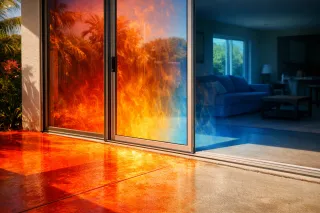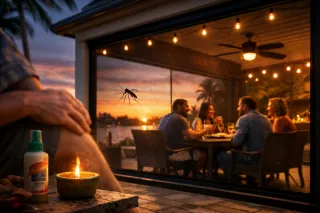

One-Track Retractable Screens are the result of years of real-world testing, research, and engineering refinement. Built to withstand the harshest conditions without sacrificing aesthetics, they offer maximum protection for your patio or lanai with hurricane-rated performance.
Tested, Trusted, Proven, and Never compromised—these screens are built for the long haul:

Fenetex introduced the patented quiet spring technology, the core of our One-Track system, nearly a decade ago.
We've crafted the perfect self-adjusting screen system that operates beautifully silently when deployed, ensures frustration-free operation, and can be used in almost any weather condition.
While others have experimented with alternative methods to achieve the advantages of our One-Track screens, none have achieved the unique combination of near-silence, ease of operation, affordability, high reliability, and exceptional dependability.

One-Track is the only screen on the market that can self correct and auto refeed screen should they become dislouged.

Powder Coated Aluminum Protects your investment from exposer and Corrosion.

Our screens are designed to withstand the extreme. High wind, Rain, or Shine, Dust Dirt, Dander, it does not matter. MaxForce Cover it all
Fenetex was the first in the industry to replace traditional zipper systems with Keder-based side retention technology, setting a new benchmark for strength and reliability. Proven over years of success, this innovation delivers smooth operation, superior wind resistance, and long-term durability
Lock Tight Side Retention
Prevent Screen Hangups
Prevent Jams
Prevent Snaggs
Prevent Rewraps.
The Fenetex Keder is made with a strong Nylon cord wrapped in smooth, slippery fabric, so it can slide into the edge of the screen track and hold tight—just like how sailboats use Keder to attach their sails to the mast. Fenetex was the first to bring this smart technology to retractable screens back in 2007.

We made our Keder system just right by picking the best cord, fabric, and special coatings. After more than 10 years of testing and using it, it works really well and lasts a long time.

Thenm, the edge of the screen is cut just right and put into the Fenetex keder. Then, two bars—one on top and one on the bottom—press together to start the sticking process.

After welding, the keder and screen become one solid piece—no zippers, glue, or stitching to fail. It's built to last, and we guarantee it with a lifetime warranty.

Last , Once the weld is finished, the keder and screen are fused together for good—no zippers, glue, or stitching to worry about. It's a bond that lasts, which is why we back it with a lifetime warranty.


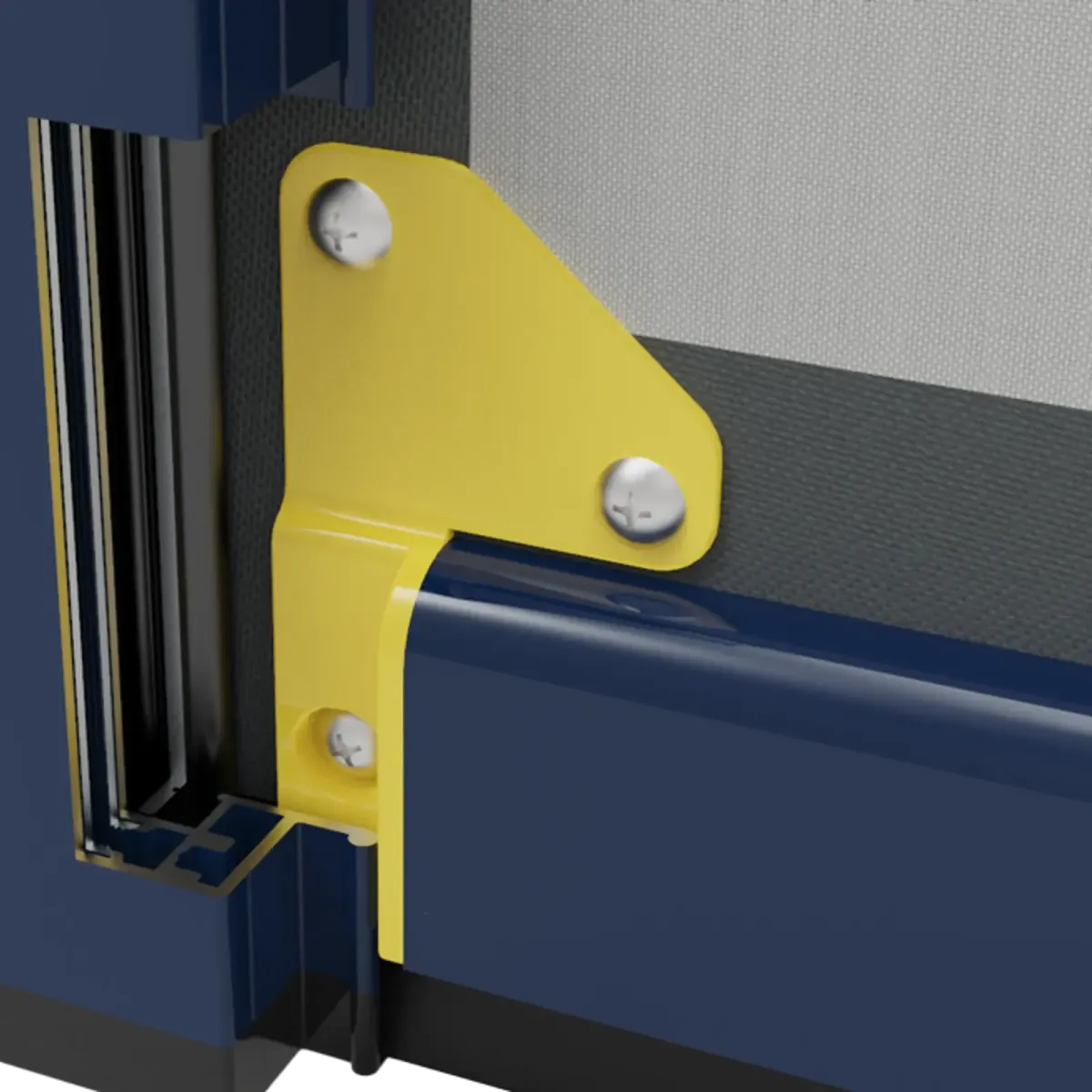
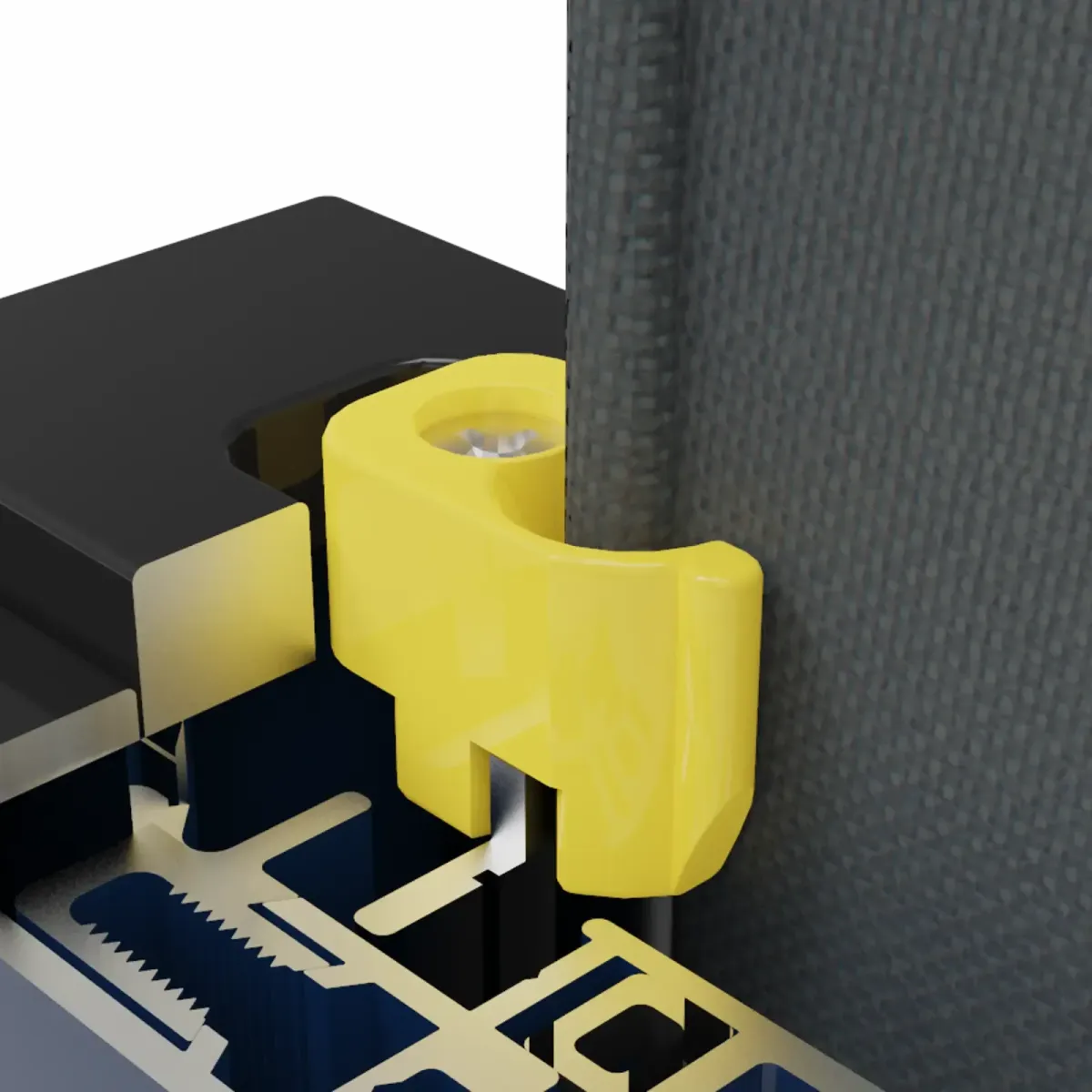
Recognizing that screen wear is most prominent at the corner where the weight bar and screen meet, Fenetex engineers designed a robust and flexible guide made of toughened nylon. This innovative design reinforces the corner connection, extending the screen's lifespan,
.

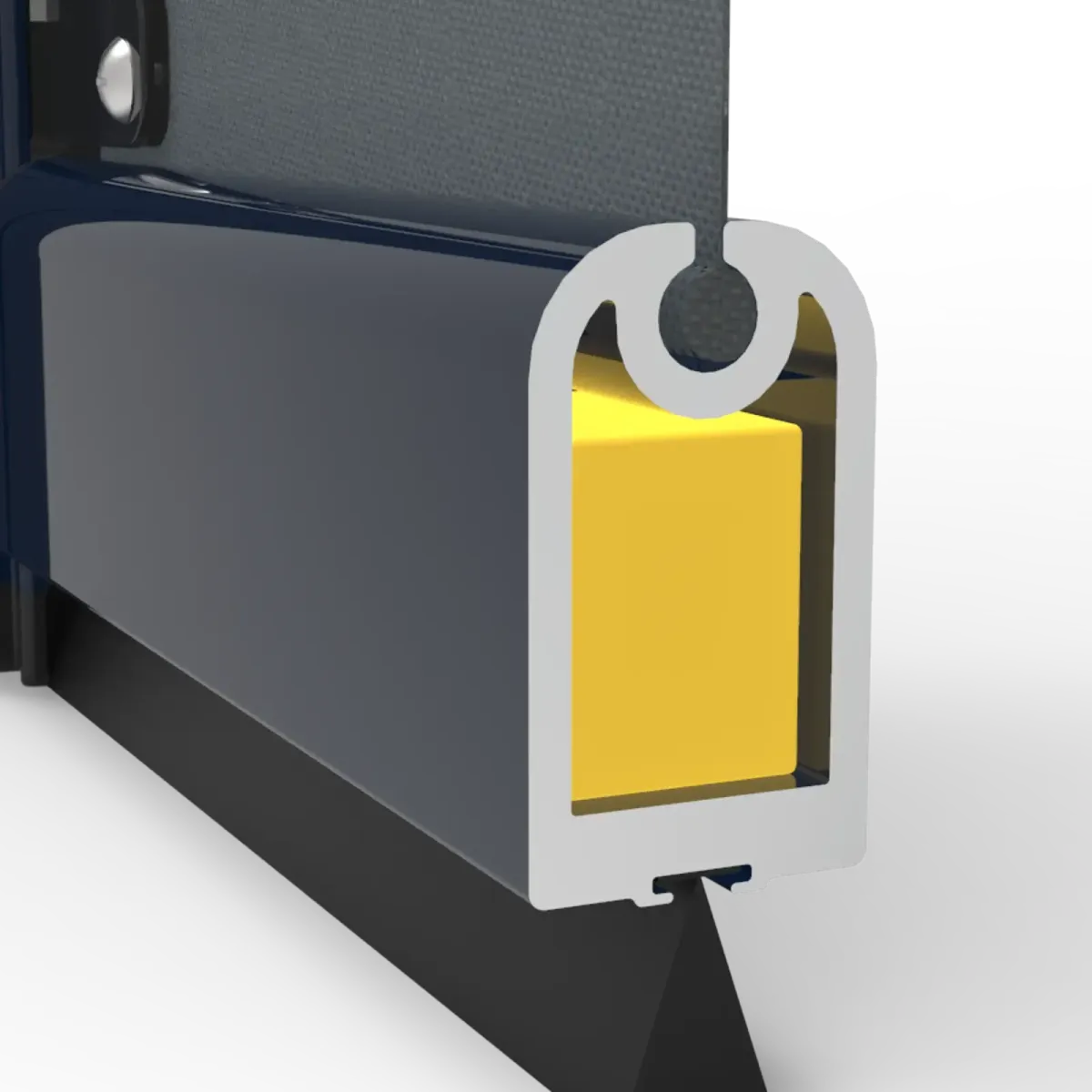
Fenetex offers a well-engineered, low-profile standard weight bar suitable for installations in low-wind areas. When rolled up, it minimizes visibility in storage. For locations with higher wind exposure, a heavier weight bar can be specified as needed.
.

Fenetex, as the first to employ keder-edged screens, opted against zippers, known for potential issues. Keder's smooth, durable design avoids past failures.
.

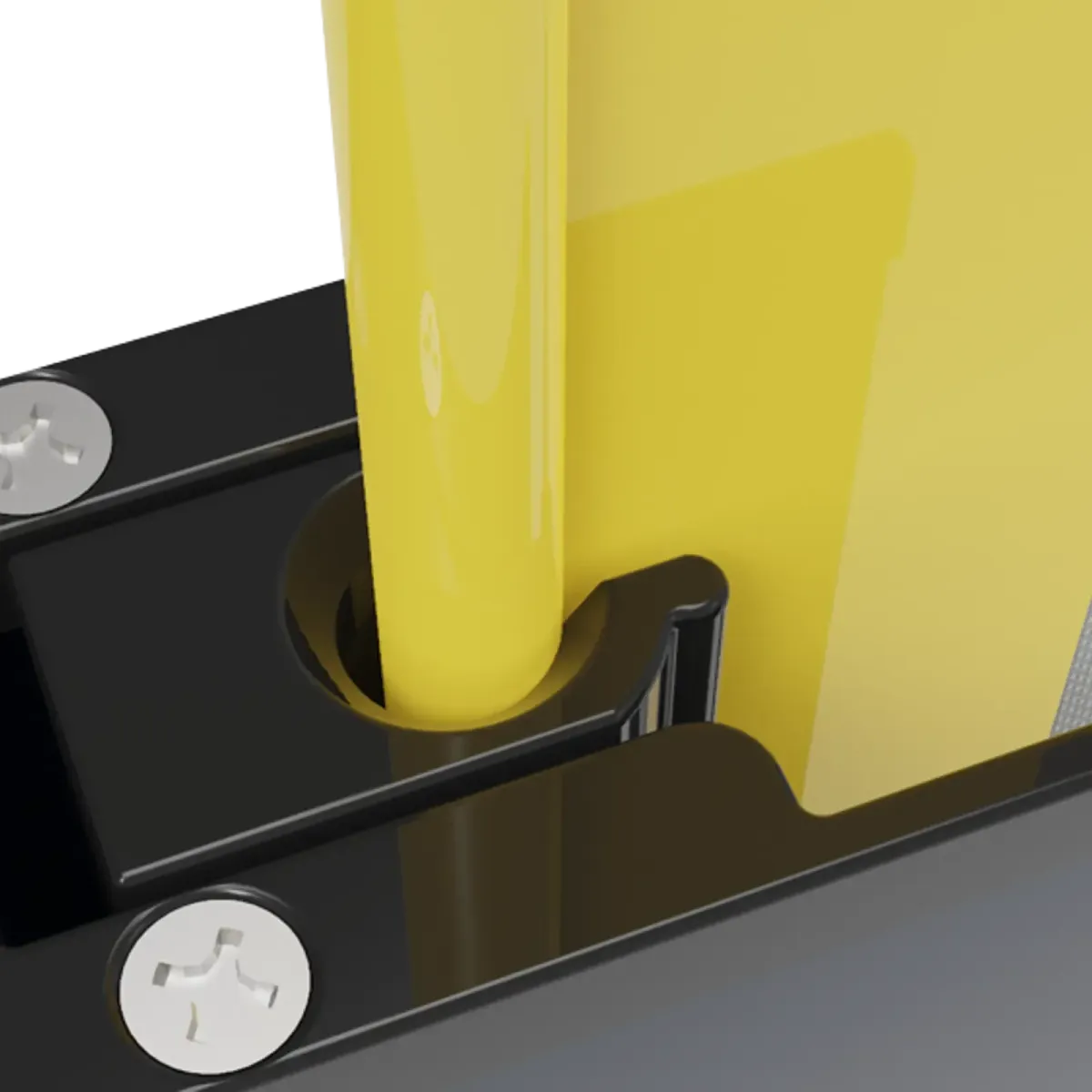
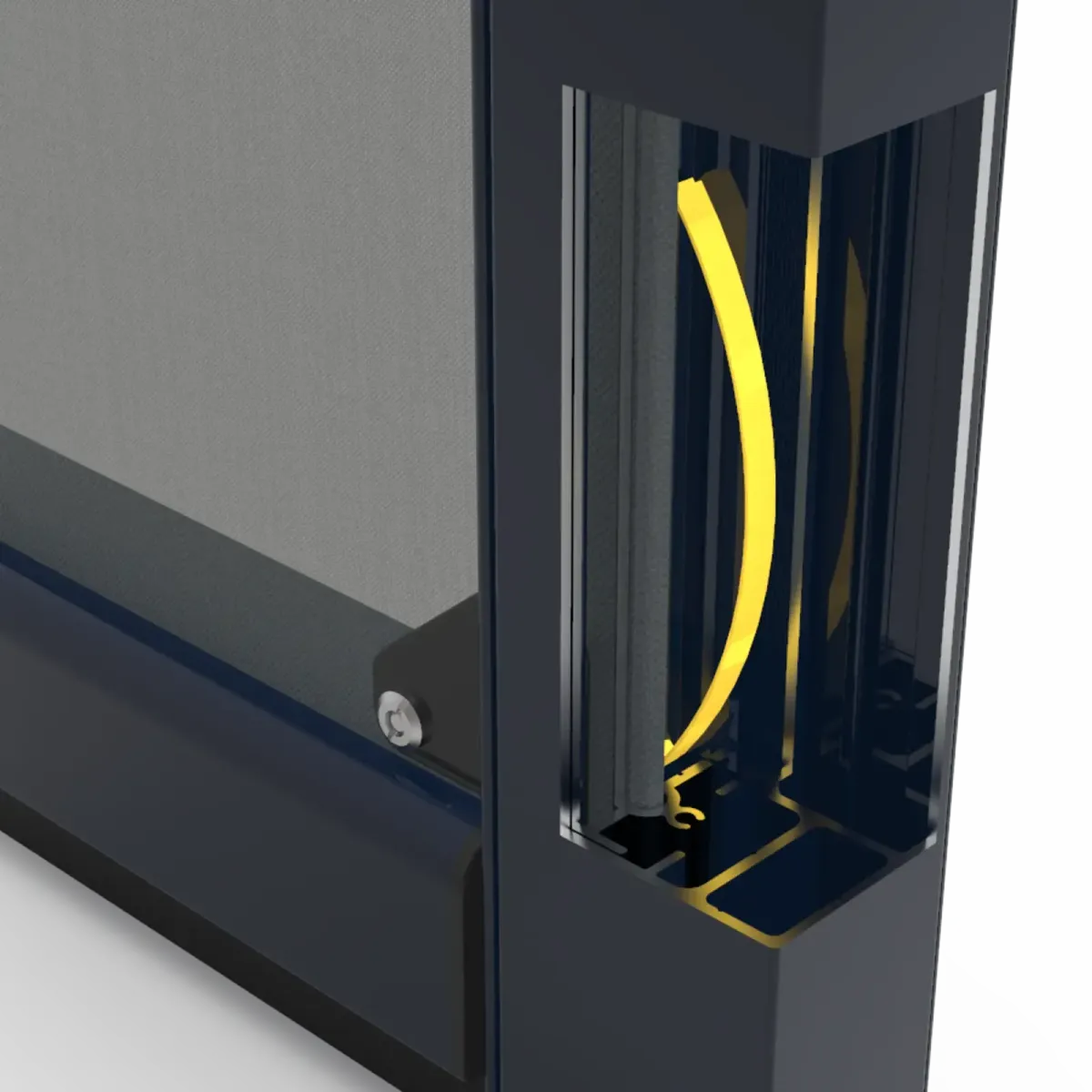
Fenetex retractable screens are designed to never come out of their tracks. The screen pre-feeder facilitates a smooth transition from the reel to the side track. Smart motors instantly halt the downward motion of the screen, preventing it from dislodging from the tracks.
.

One-Track employs a unique spring-based tensioning system that ensures nearly silent operation of the screens. This technology prioritizes a quiet and comfortable outdoor experience. Think of it like shock absorbers in a car - It's the springs that give you a quiet comfortable ride.
.
Backed by Twitchell’s OmegaTex fabric, our hurricane screens are engineered with ballistic-grade and enhanced fibers for maximum strength and durability. These fabrics aren’t just tough—they’re also UV-protected for long-lasting performance and crafted with aesthetics in mind. Choose from six elegant colors designed to complement the architecture of your home.
Our you looking for the perfect solutions to keep Mother Nature out. Nano 95 screens do exactly that.
Colors:
Black, Stone Texture, Shadow Texture, Granite, Espresso, charcoal, white, bable, bone.

Do you want to create that perfect 4 season patio. Nano 97 block outdoor elements, provides maxium privancy, but they do not compormise visability.
Colors:
Espresso Texture, Basket Tobacco, Basket Charcoal, Basket Granite, Basket Black.

AME 97 Screens are as they sound, Special. They are the Provide altimate cliamate control for your patio or lanai.
Colors:
White, Tobaco, Charcoal, Black

Do you have an annoying Neighbor or need Friday Night privacy. Black out screen are solid wall of pure unadlitrated privacy.
Black, Charcoal, Tabacco, White

The Textilene Series is all about weather control and air flow. Controal what you let in. If you block 80, then you allow 20%/10% to flow. Blocks dirt, rain, dander, harmful UV-Rays, and dust..
Colors:
Brown, Desert Sand, Busk Grey, Sandstoe, White, Black & Brown, Black

The Textilene Series is all about weather control and air flow. Controal what you let in. If you block 95, then you allow 5% to flow. Blocks dirt, rain, dander, harmful UV-Rays, and dust..
Colors:
Almond Brown, Carbon Tex, Graphite, Mushroom, Pewter, Putty, Tumbleweed...


Choosing the right screen color is simple with Fenetex. Our standard color selections are designed to blend seamlessly with your architecture and framework, offering a clean, cohesive look. For unique designs, custom powder coating is available to match any project. All finishes are marine-grade and infused with UV ray inhibitors—built to endure the elements and maintain their beauty for years to come.
Selecting your preferred control method is effortless with Fenetex. Whether you choose handheld remotes, mobile apps, or smart home integration, our systems are designed to fit your lifestyle. No need to settle—just integrate and enjoy continuous, seamless operation 24/7. It's control on your terms, exactly when and where you need it.

With the Bond Bridge Pro, managing your Fenetex MaxForce Hurricane Screens is seamless and smart. This powerful integration allows you to open or close your screens from anywhere using your smartphone, voice assistant, or home automation system. Whether you're at home, at work, or away on vacation, control is always at your fingertips.


Proudly Made in the USA—every Fenetex screen's are built with American strength, precision, and pride. From the smallest components to the final assembly, our materials are sourced and manufactured right here in the United States. No outsourcing. No compromises. Just hardworking Americans protecting American homes with the toughest screen system on the market.

At FL OUTDOORr, quality isn’t a buzzword—it’s a promise. Every Fenetex system we install is a product of precision engineering and world-class American manufacturing, built to perform under pressure and look flawless doing it.
We are highly trained professionals who treat your home like their own. From laser-accurate measurements to clean, detail-focused installations, we don’t cut corners—we define them.


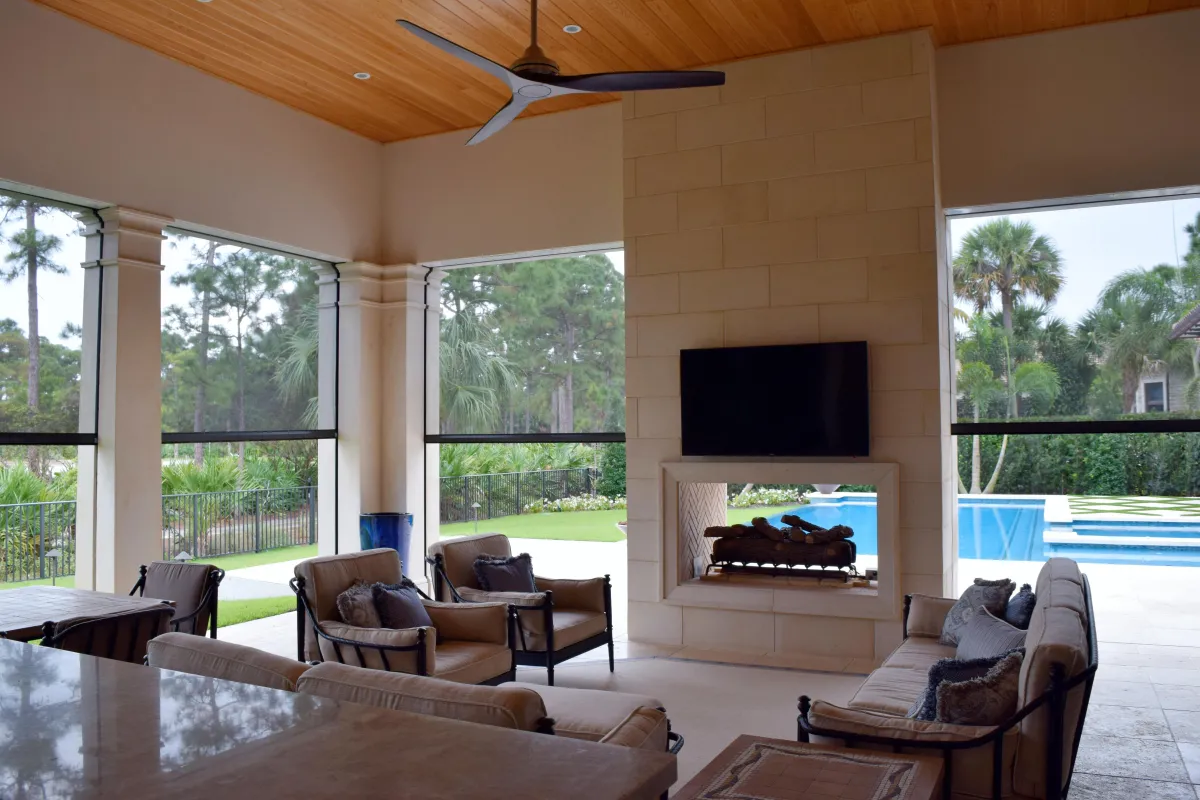
Home should be a sanctuary to relax, spend time with family, and maybe even entertain. Adding Fenetex screens to patios empowers you to curate any outdoor space so it complements your aesthetics and meets your needs
creens are the solution for both residential and commercial outdoor spaces. Having been in business since 2007, we continually innovate to improve our products and stay ahead of the industry.

Whether you're investing in your restaurant's patio seating or weather-proofing your outdoor event space, making sure those areas remain usable and enjoyable for guests is critical to the bottom line and your business' ultimate success
Does your restaurant’s patio contend with glaring sun? Or maybe the luxury outdoor kitchen at your home is being invaded by bugs? Maybe the upcoming hurricane season has you concerned. Whatever the challenge, Fenetex Motorized
S

Dave stands at the kitchen window, coffee cooling in his hands.
It's 7 AM on a Tuesday in November. The backyard looks like a graveyard for summer dreams. Patio furniture, wrapped tight in tarps. The $2,800 grill—his pride and joy, the one he researched for three months before buying—covered like a corpse waiting for spring's resurrection. The firepit sits empty, collecting leaves and regret.
Six months ago, this was his kingdom. Weekend mornings out there with coffee and the paper. Evening beers with neighbors. The satisfying sound of steaks hitting a hot grill while the kids played cornhole on the lawn.
Now? Banished. Exiled from his own territory by nothing more than a thermometer that dipped below 55 degrees.
Welcome to the Great Backyard Exile. Population: Every dad in America.
Here's a truth we don't talk about enough: American dads get kicked out of their favorite room in the house for eight months every year.
Not literally, of course. Nobody's forcing Dad inside. But the moment October hits, we all participate in this bizarre ritual where we collectively agree that outdoor spaces are now "closed for the season." We cover everything. Store everything. Abandon everything.
And Dad? Dad gets to watch through the window.
75% of Americans own an outdoor grill or smoker CNN, and yet most of them spend more than half the year under tarps, unused and forgotten. Think about that. We're a nation that collectively spent billions on outdoor equipment that sits idle two-thirds of the year.
It's like buying a boat that you're only allowed to use in July.
Let's talk about that grill for a second.
Dad didn't just buy a grill. He made an investment. He compared BTUs. He debated propane versus natural gas versus charcoal versus pellet. He read reviews. He watched YouTube videos. He justified the expense to everyone, including himself.
And for four glorious months—maybe five if he's lucky—it was everything he dreamed of.
Then winter whispered its first threat, and just like that, his $2,800 centerpiece became a giant paperweight under a waterproof cover. The outdoor kitchen that was supposed to revolutionize family dinners? Closed for renovations. Until April. Maybe May if spring decides to be difficult about it.
The tradition of men grilling emerged in the mid-20th century suburbanization, when fathers were expected to spend their free time with families in the backyard Smithsonian Magazine. We built an entire cultural identity around Dad and his grill, his domain, his turf.
And then we took it away for 60% of the year.
"It's just a patio," you might be thinking. "Dad can survive indoors like the rest of us."
Sure he can. But here's the thing—he shouldn't have to.
Research shows that 20-90 minute sessions in nature are most beneficial for mental health Mayo Clinic Press. Not "nice for mental health." Not "somewhat helpful." Most beneficial. And we're talking about all the good stuff: reduced stress, lower anxiety, exposure to green spaces that releases serotonin—the same neurotransmitter in antidepressant medications McLean Hospital.
But here's where it gets interesting for dads specifically: For men, who may face societal pressures to suppress emotions, nature offers a safe space to reflect, relax, and rejuvenate People Daily.
Translation? That outdoor space isn't just where Dad grills burgers. It's where he processes his day. It's where he decompresses after a terrible meeting. It's where he thinks through problems without anyone asking him what's wrong or trying to fix it for him.
And we shut it down every November like it's a seasonal ice cream shop.
Let's look at the math on this absurdity:
You probably have somewhere between 180 and 240 days of usable outdoor weather where you live
That means 125 to 185 days of the year, your outdoor investment is gathering dust
90% of Americans with outdoor spaces consider them more valuable than ever, and 78% made upgrades during recent years PR Newswire
Yet most of those upgraded spaces sit empty for half the year or more
It's like buying a gym membership and only going in summer. Actually, it's worse than that. At least with a gym membership, you can cancel. That $5,000 patio setup isn't going anywhere.
Let me paint you a picture of what this actually looks like:
It's Saturday morning in January. Dave wakes up early, like he always does. He makes coffee. He thinks, "Man, it would be nice to take this outside, sit by the firepit, watch the sunrise."
But the firepit's full of old leaves and probably some small animal considering it real estate. The chairs are in the garage, stacked and awkward to get to. It's 42 degrees. Not freezing. Not even that cold. But the entire outdoor space has been surrendered to winter like it's some kind of invading army.
So Dave stands at that window instead. Coffee getting cold. Staring at $8,000 worth of outdoor furniture and equipment, wrapped up and useless.
This happens approximately 185 times per year.
That's 185 mornings of wistful window-staring. 185 moments where Dad considers going outside, then remembers that everything's put away and it's "too cold anyway." 185 small defeats that add up to months of disconnection from a space he loves.
You know what that covered grill really represents? It's a white flag.
It's the moment we all collectively surrendered to the idea that outdoor living is a seasonal privilege, not a year-round right. It's when we decided that the first frost means game over until spring training.
Grilling emerged as a home food space for men where they could perform masculinity and familial domesticity simultaneously Well+Good. We created this whole identity around Dad at the grill, Dad providing, Dad in his element.
And then we made him cover it up like a shameful secret eight months a year.
Meanwhile, in Norway, they're laughing at us.
Actually, they're not laughing—they're outside. In January. Having a great time.
The Norwegians have this concept called friluftsliv (free-loofts-liv). It literally means "free air life" or "life outside," and families in Scandinavia see no barriers, weather or otherwise, to deep engagement with the outdoors year-round Appalachian Mountain Club.
They don't cover their outdoor spaces and surrender to winter. They dress appropriately and keep living. They have a saying: "There's no such thing as bad weather, only bad clothes." West + Main
And it works. This outdoor lifestyle helped Norway rank #5 in the UN's World Happiness Report National Geographic. Not despite their harsh winters—including their harsh winters.
They figured out that hibernating indoors for half the year isn't a requirement. It's a choice. And they chose differently.
We could too.
So what's this actually costing Dad? Let's add it up:
Financial:
Thousands in outdoor equipment used at 40% capacity
Degradation of unused furniture and grills from storage
Lost opportunities for family memories and gatherings
Physical:
Two hours a week in green spaces substantially improves health and psychological well-being Yale e360
But how's Dad supposed to hit that when his green space is wrapped in tarps?
Just five minutes of exposure to green spaces can regulate the sympathetic nervous system McLean Hospital—stress relief Dad's missing out on daily
Mental:
Loss of a decompression space during the most stressful months of the year (hello, holidays)
Disconnection from an area that provides genuine mental health benefits
That subtle, nagging feeling that something's missing but you can't quite name it
Social:
No outdoor gatherings for Thanksgiving, Christmas, New Year's
Missing out on the best football-watching venue on game days
Losing a natural space where conversations happen differently than they do inside
Add it all up, and the Great Backyard Exile isn't just inconvenient. It's costly in ways that actually matter.
Here's something interesting: Even in decent weather—those 55-degree October afternoons or 48-degree March mornings—Dad doesn't go outside.
Why? Because somewhere along the way, we internalized this idea that outdoor spaces are summer-only zones. It's not even about the temperature anymore. It's about permission.
We've created an invisible fence around outdoor living, marked by arbitrary temperature thresholds and calendar dates. And once we cross that boundary into "not outdoor season," Dad feels weird about using the space. Like he's doing something wrong. Like he's the only one crazy enough to want to be outside when it's below 60 degrees.
Spoiler alert: He's not crazy. The system is.
You know why Dad doesn't make a big deal about this?
Because it's just a patio. Just a grill. Just outdoor furniture.
Except it's not.
But how do you explain to your family that you're genuinely bothered by not being able to use your backyard in winter? How do you articulate that this outdoor space represents something more than just square footage? That it's not about the grill itself, but what the grill represents—autonomy, purpose, a space that's his?
You don't. So Dad smiles when he gets another "World's Best Dad" mug for Christmas. He says thank you. He puts it in the cupboard with the others.
And he stands at that window, coffee getting cold, staring at his covered kingdom, waiting for spring.
Here's what we should be wondering: Why do we accept this?
Why did we collectively decide that outdoor living is seasonal? Who made that rule? And more importantly—why are we still following it?
62% of experts say creating outdoor spaces for year-round use is now the top priority for homeowners Marketresearch. The conversation is shifting. People are starting to realize that surrendering half the year doesn't have to be the default.
But awareness isn't enough. We need action.
We need to stop treating Dad's outdoor space like a fair-weather friend—there when things are easy, gone when conditions get tough. We need to acknowledge that this exile is real, it matters, and it's costing more than we think.
And most importantly, we need to do something about it.
The good news? This is a completely solvable problem.
Dad doesn't need to be exiled. That grill doesn't need to hibernate. Those 185 days of wistful window-staring? They can end.
But first, we need to understand what's actually possible. What works. What doesn't. And what it really takes to transform a summer-only patio into a space Dad can use in December.
That's exactly what we're diving into next week.
Because here's the thing about exile: It only lasts as long as we let it.
Next Week: Part 2 - "The Four-Season Dad Cave"
Real solutions for making outdoor spaces usable in January—without requiring a second mortgage or a complete renovation. Fire pits, heating options, and the surprisingly simple changes that make winter outdoor living actually work.
Your Turn: What's Dad's outdoor space look like right now? Covered and abandoned, or still getting some use? Drop a comment below—we want to hear your Great Backyard Exile stories.
Part 1: The Great Backyard Exile – You Are Here
Part 2: The Four-Season Dad Cave – Coming Next Week
Part 3: Why Mom Should Be Your Greatest Ally – Coming Soon
Part 4: The 48-Hour Weekend Transformation – Coming Soon
Enjoying this series? Share it with someone whose dad is currently staring at a covered grill through a window. Let's end the Great Backyard Exile, one dad at a time.

Dave stands at the kitchen window, coffee cooling in his hands.
It's 7 AM on a Tuesday in November. The backyard looks like a graveyard for summer dreams. Patio furniture, wrapped tight in tarps. The $2,800 grill—his pride and joy, the one he researched for three months before buying—covered like a corpse waiting for spring's resurrection. The firepit sits empty, collecting leaves and regret.
Six months ago, this was his kingdom. Weekend mornings out there with coffee and the paper. Evening beers with neighbors. The satisfying sound of steaks hitting a hot grill while the kids played cornhole on the lawn.
Now? Banished. Exiled from his own territory by nothing more than a thermometer that dipped below 55 degrees.
Welcome to the Great Backyard Exile. Population: Every dad in America.
Here's a truth we don't talk about enough: American dads get kicked out of their favorite room in the house for eight months every year.
Not literally, of course. Nobody's forcing Dad inside. But the moment October hits, we all participate in this bizarre ritual where we collectively agree that outdoor spaces are now "closed for the season." We cover everything. Store everything. Abandon everything.
And Dad? Dad gets to watch through the window.
75% of Americans own an outdoor grill or smoker CNN, and yet most of them spend more than half the year under tarps, unused and forgotten. Think about that. We're a nation that collectively spent billions on outdoor equipment that sits idle two-thirds of the year.
It's like buying a boat that you're only allowed to use in July.
Let's talk about that grill for a second.
Dad didn't just buy a grill. He made an investment. He compared BTUs. He debated propane versus natural gas versus charcoal versus pellet. He read reviews. He watched YouTube videos. He justified the expense to everyone, including himself.
And for four glorious months—maybe five if he's lucky—it was everything he dreamed of.
Then winter whispered its first threat, and just like that, his $2,800 centerpiece became a giant paperweight under a waterproof cover. The outdoor kitchen that was supposed to revolutionize family dinners? Closed for renovations. Until April. Maybe May if spring decides to be difficult about it.
The tradition of men grilling emerged in the mid-20th century suburbanization, when fathers were expected to spend their free time with families in the backyard Smithsonian Magazine. We built an entire cultural identity around Dad and his grill, his domain, his turf.
And then we took it away for 60% of the year.
"It's just a patio," you might be thinking. "Dad can survive indoors like the rest of us."
Sure he can. But here's the thing—he shouldn't have to.
Research shows that 20-90 minute sessions in nature are most beneficial for mental health Mayo Clinic Press. Not "nice for mental health." Not "somewhat helpful." Most beneficial. And we're talking about all the good stuff: reduced stress, lower anxiety, exposure to green spaces that releases serotonin—the same neurotransmitter in antidepressant medications McLean Hospital.
But here's where it gets interesting for dads specifically: For men, who may face societal pressures to suppress emotions, nature offers a safe space to reflect, relax, and rejuvenate People Daily.
Translation? That outdoor space isn't just where Dad grills burgers. It's where he processes his day. It's where he decompresses after a terrible meeting. It's where he thinks through problems without anyone asking him what's wrong or trying to fix it for him.
And we shut it down every November like it's a seasonal ice cream shop.
Let's look at the math on this absurdity:
You probably have somewhere between 180 and 240 days of usable outdoor weather where you live
That means 125 to 185 days of the year, your outdoor investment is gathering dust
90% of Americans with outdoor spaces consider them more valuable than ever, and 78% made upgrades during recent years PR Newswire
Yet most of those upgraded spaces sit empty for half the year or more
It's like buying a gym membership and only going in summer. Actually, it's worse than that. At least with a gym membership, you can cancel. That $5,000 patio setup isn't going anywhere.
Let me paint you a picture of what this actually looks like:
It's Saturday morning in January. Dave wakes up early, like he always does. He makes coffee. He thinks, "Man, it would be nice to take this outside, sit by the firepit, watch the sunrise."
But the firepit's full of old leaves and probably some small animal considering it real estate. The chairs are in the garage, stacked and awkward to get to. It's 42 degrees. Not freezing. Not even that cold. But the entire outdoor space has been surrendered to winter like it's some kind of invading army.
So Dave stands at that window instead. Coffee getting cold. Staring at $8,000 worth of outdoor furniture and equipment, wrapped up and useless.
This happens approximately 185 times per year.
That's 185 mornings of wistful window-staring. 185 moments where Dad considers going outside, then remembers that everything's put away and it's "too cold anyway." 185 small defeats that add up to months of disconnection from a space he loves.
You know what that covered grill really represents? It's a white flag.
It's the moment we all collectively surrendered to the idea that outdoor living is a seasonal privilege, not a year-round right. It's when we decided that the first frost means game over until spring training.
Grilling emerged as a home food space for men where they could perform masculinity and familial domesticity simultaneously Well+Good. We created this whole identity around Dad at the grill, Dad providing, Dad in his element.
And then we made him cover it up like a shameful secret eight months a year.
Meanwhile, in Norway, they're laughing at us.
Actually, they're not laughing—they're outside. In January. Having a great time.
The Norwegians have this concept called friluftsliv (free-loofts-liv). It literally means "free air life" or "life outside," and families in Scandinavia see no barriers, weather or otherwise, to deep engagement with the outdoors year-round Appalachian Mountain Club.
They don't cover their outdoor spaces and surrender to winter. They dress appropriately and keep living. They have a saying: "There's no such thing as bad weather, only bad clothes." West + Main
And it works. This outdoor lifestyle helped Norway rank #5 in the UN's World Happiness Report National Geographic. Not despite their harsh winters—including their harsh winters.
They figured out that hibernating indoors for half the year isn't a requirement. It's a choice. And they chose differently.
We could too.
So what's this actually costing Dad? Let's add it up:
Financial:
Thousands in outdoor equipment used at 40% capacity
Degradation of unused furniture and grills from storage
Lost opportunities for family memories and gatherings
Physical:
Two hours a week in green spaces substantially improves health and psychological well-being Yale e360
But how's Dad supposed to hit that when his green space is wrapped in tarps?
Just five minutes of exposure to green spaces can regulate the sympathetic nervous system McLean Hospital—stress relief Dad's missing out on daily
Mental:
Loss of a decompression space during the most stressful months of the year (hello, holidays)
Disconnection from an area that provides genuine mental health benefits
That subtle, nagging feeling that something's missing but you can't quite name it
Social:
No outdoor gatherings for Thanksgiving, Christmas, New Year's
Missing out on the best football-watching venue on game days
Losing a natural space where conversations happen differently than they do inside
Add it all up, and the Great Backyard Exile isn't just inconvenient. It's costly in ways that actually matter.
Here's something interesting: Even in decent weather—those 55-degree October afternoons or 48-degree March mornings—Dad doesn't go outside.
Why? Because somewhere along the way, we internalized this idea that outdoor spaces are summer-only zones. It's not even about the temperature anymore. It's about permission.
We've created an invisible fence around outdoor living, marked by arbitrary temperature thresholds and calendar dates. And once we cross that boundary into "not outdoor season," Dad feels weird about using the space. Like he's doing something wrong. Like he's the only one crazy enough to want to be outside when it's below 60 degrees.
Spoiler alert: He's not crazy. The system is.
You know why Dad doesn't make a big deal about this?
Because it's just a patio. Just a grill. Just outdoor furniture.
Except it's not.
But how do you explain to your family that you're genuinely bothered by not being able to use your backyard in winter? How do you articulate that this outdoor space represents something more than just square footage? That it's not about the grill itself, but what the grill represents—autonomy, purpose, a space that's his?
You don't. So Dad smiles when he gets another "World's Best Dad" mug for Christmas. He says thank you. He puts it in the cupboard with the others.
And he stands at that window, coffee getting cold, staring at his covered kingdom, waiting for spring.
Here's what we should be wondering: Why do we accept this?
Why did we collectively decide that outdoor living is seasonal? Who made that rule? And more importantly—why are we still following it?
62% of experts say creating outdoor spaces for year-round use is now the top priority for homeowners Marketresearch. The conversation is shifting. People are starting to realize that surrendering half the year doesn't have to be the default.
But awareness isn't enough. We need action.
We need to stop treating Dad's outdoor space like a fair-weather friend—there when things are easy, gone when conditions get tough. We need to acknowledge that this exile is real, it matters, and it's costing more than we think.
And most importantly, we need to do something about it.
The good news? This is a completely solvable problem.
Dad doesn't need to be exiled. That grill doesn't need to hibernate. Those 185 days of wistful window-staring? They can end.
But first, we need to understand what's actually possible. What works. What doesn't. And what it really takes to transform a summer-only patio into a space Dad can use in December.
That's exactly what we're diving into next week.
Because here's the thing about exile: It only lasts as long as we let it.
Next Week: Part 2 - "The Four-Season Dad Cave"
Real solutions for making outdoor spaces usable in January—without requiring a second mortgage or a complete renovation. Fire pits, heating options, and the surprisingly simple changes that make winter outdoor living actually work.
Your Turn: What's Dad's outdoor space look like right now? Covered and abandoned, or still getting some use? Drop a comment below—we want to hear your Great Backyard Exile stories.
Part 1: The Great Backyard Exile – You Are Here
Part 2: The Four-Season Dad Cave – Coming Next Week
Part 3: Why Mom Should Be Your Greatest Ally – Coming Soon
Part 4: The 48-Hour Weekend Transformation – Coming Soon
Enjoying this series? Share it with someone whose dad is currently staring at a covered grill through a window. Let's end the Great Backyard Exile, one dad at a time.
Fenetex screens use a patented dual-track system that resists wind and keeps the screen tight and in place. Unlike traditional zipper systems, Fenetex screens are engineered for durability, self-correction, and long-term performance—even in extreme weather conditions.

Yes. Fenetex offers hurricane-rated screens, MaxForce, that can be engineered to meet local building codes and tested to withstand wind speeds up to 185+ mph. One-Track can withstand Winds Up To 100 mph. They're ideal for protecting patios, lanais, and outdoor living spaces in storm-prone areas like Florida.

Answer:
Fenetex offers multiple screen options to fit different needs:
Bug Screens – Keep insects out while maintaining airflow.
Solar Screens – Block UV rays and reduce heat and glare.
Privacy Screens – Add seclusion with tinted or opaque materials.
Hurricane Screens – Provide structural protection during storms.
All screens can be interchangeable in the same frame system.

Fenetex motorized screens are powered by a quiet, remote-controlled motor. You can operate them with a handheld remote, wall switch, or even integrate them with your home automation system, depending on your setup.

Yes. Fenetex stands behind its craftsmanship with one of the best warranties in the industry. Depending on the type of screen, there are warranties on the motor, frame, and fabric, and the welded keder attachment is backed by a lifetime warranty.

Work requiring DBPR licensure in partnership with CGC1532839
Deerfield Beach
Light House Point
Plantation
South West Ranches
Facebook
Instagram
X
LinkedIn
Youtube
TikTok
Pinterest